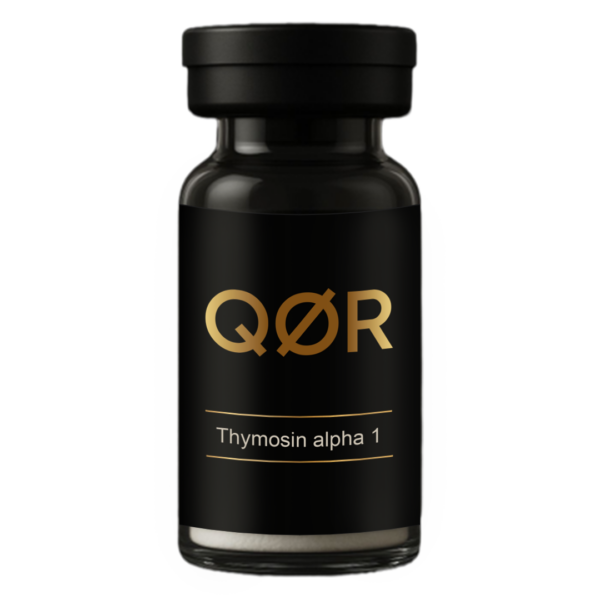
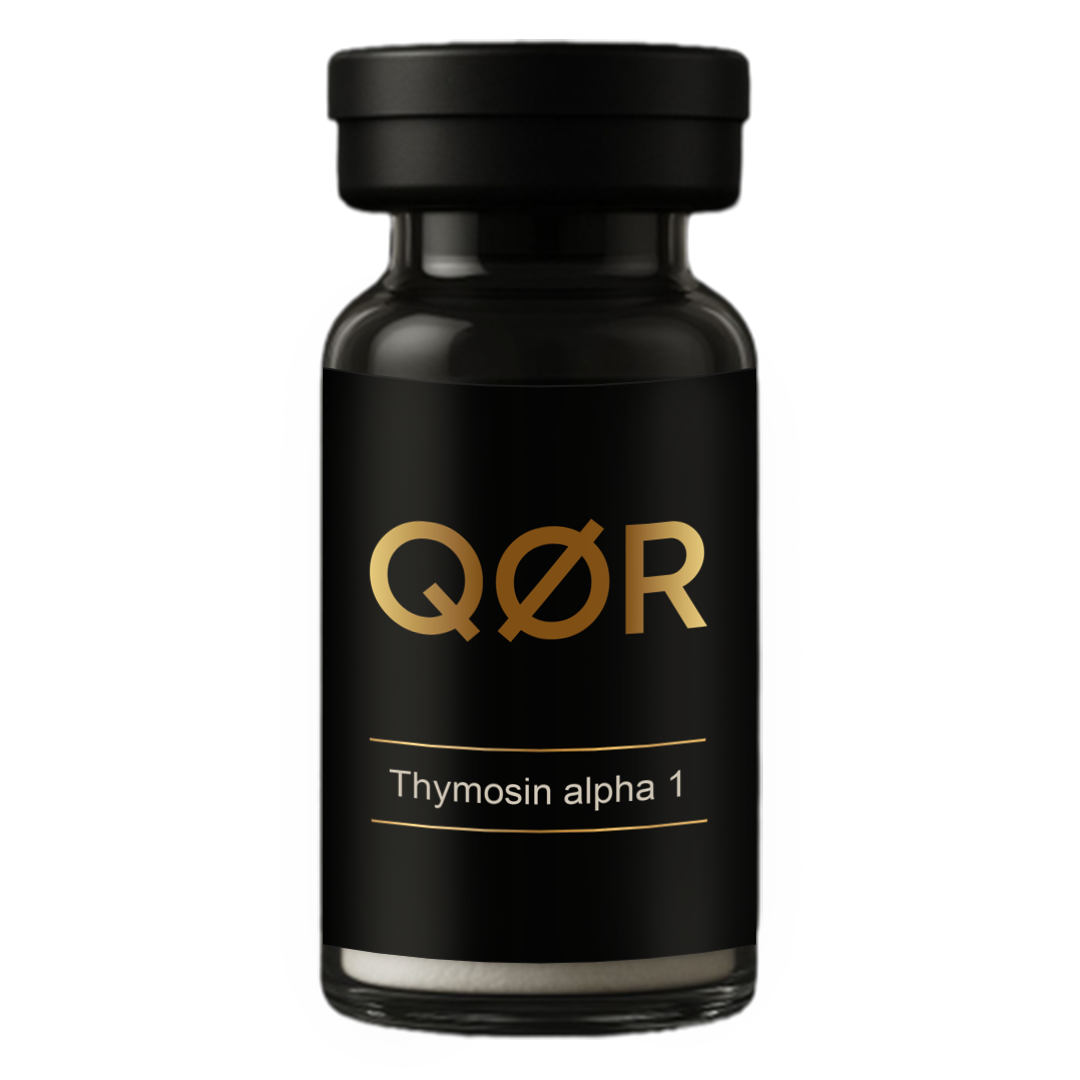
Timosina alfa: péptido inmunomodulador derivado del timo utilizado en entornos de investigación para explorar la maduración de las células T, las redes de citocinas y los mecanismos de respuesta del huésped.
La timosina alfa 1 es una versión sintética de un fragmento peptídico natural aislado originalmente del tejido tímico a principios de la década de 1970.
Se suministra como péptido de grado de investigación para laboratorios que estudian la regulación del sistema inmunitario y las vías de señalización derivadas del timo.
Información molecular y mecanística
La timosina alfa 1 se clasifica como un péptido inmunomodulador y ha sido ampliamente evaluada como regulador de la función inmunitaria en entornos de investigación preclínica y clínica.
En la literatura científica, figura como un compuesto de referencia para explorar la biología de las células T, la presentación de antígenos, la interacción entre la inmunidad innata y adaptativa, y la respuesta del huésped ante diversos desafíos bajo condiciones experimentales controladas. Los programas de investigación han investigado la timosina alfa 1 en modelos y estudios clínicos relacionados con infecciones virales crónicas, afecciones respiratorias, inmunología del cáncer y otros trastornos inmunitarios. En estos contextos, los investigadores se centran en parámetros como la distribución de subpoblaciones de linfocitos, perfiles de citocinas, marcadores de activación o agotamiento inmunitario e histopatología tisular para definir el perfil de actividad inmunológica del péptido.
Uso previsto
Este producto está destinado exclusivamente a experimentos in vitro, preparaciones ex vivo y otras aplicaciones de investigación de laboratorio controladas, incluidos estudios con animales realizados bajo la supervisión adecuada. Los usos típicos incluyen ensayos de cultivo de células inmunitarias, estudios mecánicos de la función de las células T y dendríticas, y trabajos in vivo sobre las vías de regulación inmunitaria.
No está destinado al uso humano ni veterinario. No está destinado al diagnóstico, tratamiento, cura, prevención o mitigación de ninguna enfermedad o condición clínica. No es un fármaco, alimento, suplemento dietético, cosmético ni dispositivo médico.
Características principales
Péptido inmunomodulador sintético derivado del timo para investigación inmunológica. Adecuado para estudios sobre la regulación de células T, modulación de la red de citocinas e interfaz inmunitaria innata-adaptativa.
Fabricado en condiciones controladas con verificación analítica de identidad y pureza
Overview
Thymosin Alpha 1 is a thymus derived peptide used as a tool compound in immunology research.
It is applied in controlled preclinical and clinical study contexts to examine T cell biology dendritic cell function and broader immune regulation.
The summary below reframes the literature strictly as research context.
Nothing here is a usage claim and none of it should be read as guidance for clinical or therapeutic application.
1. Immune system modulation and T cell function
Thymosin Alpha 1 was first isolated from thymus tissue where it is linked to maturation and function of T lymphocytes. The thymus is central to the development of T cells which support adaptive immune memory and coordinate other immune cells. Mouse models lacking thymus tissue have been used to show that Thymosin Alpha 1 can restore many immune function readouts and reduce susceptibility to systemic infection under experimental conditions. At the molecular level these studies report activation of key signaling pathways and increased production of cytokines and regulatory mediators that coordinate activity of multiple immune cell subsets. Researchers use these models to position Thymosin Alpha 1 as a probe for fundamental immune network control rather than as a finished treatment.
2. Vaccine response and adjuvant style research
Thymosin Alpha 1 has been investigated as an immune response modulator in vaccine related studies. Work in this area compares immune responses to inactivated antigens with and without Thymosin Alpha 1 co administration in controlled preclinical and clinical settings. Measured endpoints include antibody titers T cell responses and duration of measurable immunity. These investigations are of particular interest where baseline vaccine responses are suboptimal or where stronger or more durable responses are desired such as in high risk infectious disease models. This body of research is framed around understanding how Thymosin Alpha 1 influences vaccine immunogenicity endpoints within defined protocols.
3. Sepsis and dysregulated immune response models
Sepsis research uses Thymosin Alpha 1 to probe how immune modulation might influence outcomes when the host response becomes dysregulated. Clinical and animal studies report on mortality rates organ function markers and long term complications in cohorts receiving Thymosin Alpha 1 under protocolized conditions. These results are used to explore whether adjusting immune responses in sepsis can shift trajectories toward improved survival and recovery. Ongoing work continues to test Thymosin Alpha 1 as a potential adjunct in sepsis management strategies while focusing on mechanistic insights into host response regulation.
4. Neuroimmune interfaces and neurodevelopment models
The immune system plays important roles in brain development and maintenance. Mouse data indicate that Thymosin Alpha 1 can influence neurodevelopmental processes and cognitive performance in young animals. Experimental designs track gene expression for neuronal growth connectivity and synaptic development as well as behavioral readouts such as maze learning in treated versus control groups. Research suggests that Thymosin Alpha 1 can tilt central nervous system environments toward growth supporting profiles while dampening inflammatory pathway activation in these models. This area is exploratory and positions Thymosin Alpha 1 as a probe for neuroimmune cross talk and neurodevelopmental regulation.
5. Fungal infection and dendritic cell biology
Dendritic cells are a critical bridge between innate detection and adaptive responses. Thymosin Alpha 1 has been shown in vitro and in animal models to support dendritic cell maturation and antigen presenting capacity particularly in the context of fungal challenges. In aspergillus infection models Thymosin Alpha 1 exposure is associated with enhanced T helper cell activation and more effective recognition of fungal antigens. These findings are used to investigate how dendritic cell tuning can alter antifungal immunity when combined with standard antifungal therapies. The data illustrate the depth of Thymosin Alpha 1 involvement at early steps of antigen processing rather than asserting direct antifungal activity.
6. Chronic viral infection research hepatitis and HIV
Thymosin Alpha 1 has an extensive clinical literature in chronic viral infections especially hepatitis B and hepatitis C. Studies have evaluated it as monotherapy and in combination with standard antiviral regimens measuring virologic responses liver function markers histology and long term outcomes. In several countries Thymosin Alpha 1 has been used as part of hepatitis management strategies based on these data. Research has also tested it as an immune stimulant paired with vaccines against hepatitis viruses to evaluate whether it enhances seroconversion and response durability. In HIV related work Thymosin Alpha 1 has been evaluated in people on antiretroviral therapy to examine restoration of immune regulation cytotoxic T cell function and inflammatory markers. Preclinical data further suggest that Thymosin Alpha 1 can influence CD8 T cell production of factors that limit HIV replication and reactivation. All of this is context for how the peptide is used as an immune modulator in complex viral disease research programs.
7. Blood pressure and ACE related pathways
Newer studies indicate that Thymosin Alpha 1 can inhibit angiotensin converting enzyme in experimental systems. ACE inhibition is a well established pharmacologic strategy for reducing blood pressure and modulating cardiac and vascular remodeling. Laboratory and early clinical work examines whether Thymosin Alpha 1 can shift hemodynamic parameters vascular function and organ protection markers through partial ACE pathway engagement. This is an emerging area and is being explored specifically at the mechanism level including comparisons with existing ACE inhibitor drugs.
8. Oncology research and combination therapy studies
Thymosin Alpha 1 has been used in a wide range of oncology models including lung liver breast melanoma and colon cancer. In vitro work on human cancer cell lines such as A549 demonstrates antiproliferative and anti migration effects under defined conditions. Combination studies with chemotherapy agents for example dacarbazine have shown extensions in progression free survival without added toxicity in some clinical cohorts.
Immune profiling in these studies often reveals increased CD4 and CD8 T cells and elevated cytokines such as interferon gamma and interleukin 2.
Long acting Thymosin Alpha 1 variants have been tested in mouse tumor models with reported improvements in tumor growth control and immune activation markers.
Collectively these data position Thymosin Alpha 1 as an immune focused adjunct in oncology research rather than a stand alone cytotoxic agent.
9. Inflammatory pain and nociception pathways
Inflammatory pain research uses Thymosin Alpha 1 to probe links between immune modulation and nociceptive pathways. Mouse models show that Thymosin Alpha 1 can reduce production of pro inflammatory cytokines such as TNF alpha and IL 1 beta at sites of inflammation. Behavioral assays indicate reduced pain related responses which correlate with lowered inflammatory mediator levels in local tissues. This mechanism differs from typical non steroidal anti inflammatory drugs and opens a window into immune centered strategies for pain modulation.
10. Cystic fibrosis and CFTR related inflammation
In cystic fibrosis models chronic inflammation and defective CFTR protein function drive much of the pathology. Thymosin Alpha 1 has been studied for its ability to reduce inflammatory signaling and to influence CFTR function in preclinical systems. Endpoints include airway inflammation markers mucociliary clearance parameters infection rates and CFTR activity assays. This line of work explores whether a single immunomodulatory agent can impact multiple nodes of CF pathophysiology in experimental settings.
11. Dental trauma and tissue repair models
Research on avulsed and replanted teeth has assessed Thymosin Alpha 1 as a modulator of healing outcomes. In these models Thymosin Alpha 1 is associated with improved soft tissue healing around the injury site and better survival of replanted teeth compared with controls. Histologic and clinical style endpoints such as periodontal ligament integrity inflammatory infiltrate and root resorption are used to characterise these effects. These findings support broader exploration of Thymosin Alpha 1 in tissue repair and regeneration paradigms.
Typical research applications
Across the literature Thymosin Alpha 1 is used in T cell and dendritic cell function studies vaccine response and adjuvant research sepsis and dysregulated host response models neuroimmune and neurodevelopment investigations fungal infection and antifungal adjuvant studies chronic viral infection trials in hepatitis and HIV ACE pathway and blood pressure related research oncology combination therapy and immune profiling inflammatory pain models cystic fibrosis and mucosal inflammation studies
dental trauma and tissue repair models.
In all of these contexts Thymosin Alpha 1 is a research tool to understand immune and host response mechanisms.
Important research disclaimer
All findings summarised here come from in vitro systems animal models and clinical studies conducted under specific protocols and regulatory frameworks.
They are presented solely to inform qualified researchers about how Thymosin Alpha 1 has been used in scientific investigations.
These observations do not demonstrate or imply that Thymosin Alpha 1 is safe or effective for any self directed or off protocol use.
They are not dosing instructions medical advice or guidance for treatment of infection cancer sepsis autoimmune disease cystic fibrosis hypertension pain or any other condition.
The Thymosin Alpha 1 product you are offering is intended strictly for laboratory research applications.
It is not for human or veterinary use and must not be used for diagnosis treatment cure prevention or mitigation of any disease or condition.
NAD: Una coenzima metabólica central utilizada en ensayos de laboratorio para estudiar la bioenergética mitocondrial, la actividad de las sirtuinas y las vías de señalización dependientes de NAD.
Glutatión 1500 mg: Un reactivo tripéptido fundamental para investigar el tamponamiento redox celular, la cinética de enzimas antioxidantes y las vías de desintoxicación mediadas por tioles.
Kisspeptina-10: Un decapéptido bioactivo utilizado para activar el KISS1R (GPR54) en estudios de señalización neuroendocrina y dinámica neuronal de GnRH.
MOTS-c: Péptido derivado mitocondrial utilizado para investigar la comunicación mitocondria-núcleo, la activación de AMPK y la homeostasis metabólica celular.
Vistos recientemente
Lo que nuestros clientes dicen de nosotros
Laboratorio de investigación privado
QØR nos ha suministrado materiales de referencia consistentes y documentación de lote clara en múltiples pedidos, lo que respalda nuestro trabajo interno de validación de ensayos
Centro de investigación académica
Desde el pedido hasta la entrega, la comunicación y la documentación han cumplido nuestras expectativas institucionales para la adquisición de materiales de investigación.
Organización privada de investigación
Registros de lote coherentes y una comunicación técnica clara respaldan nuestros requisitos internos de calidad.
Centro de Investigación Académica
La documentación estaba completa, el embalaje era adecuado para nuestras instalaciones y la entrega se ajustó a nuestros plazos internos.