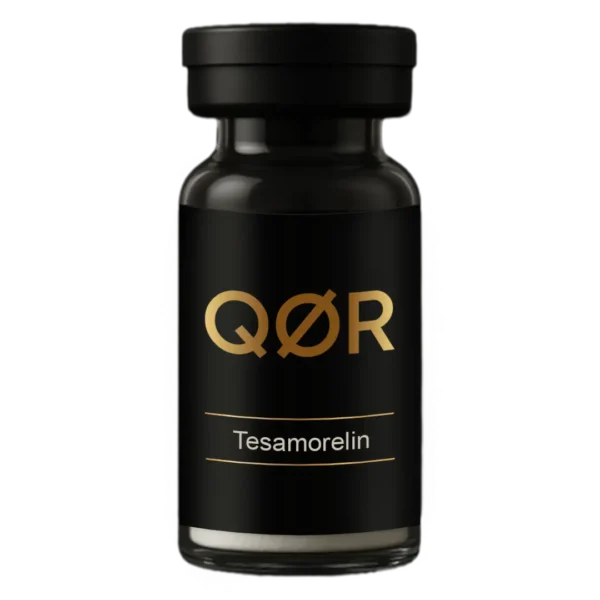
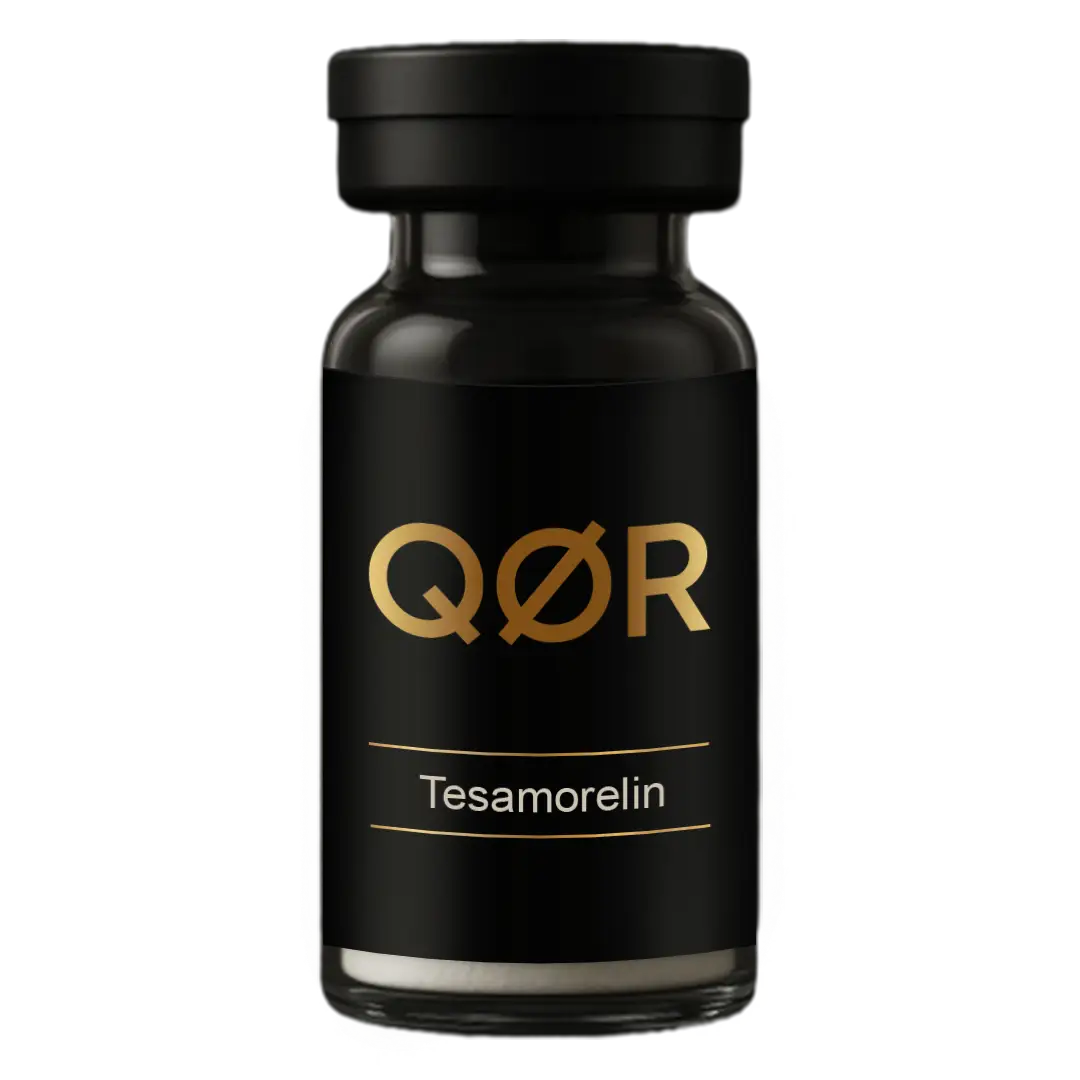
Tesamorelin: A 44-amino acid GHRH analogue used to investigate growth hormone axis regulation, visceral adiposity, and neuroendocrine-metabolic interactions.
Tesamorelin is a synthetic peptide consisting of 44 amino acids and is classified as an analogue of growth hormone releasing hormone GHRH. It is supplied as a research grade material for laboratories studying hypothalamic pituitary axis regulation body composition endpoints and peripheral tissue signaling linked to GHRH pathways.
Molecular and mechanistic information
Tesamorelin has been engineered to mimic and extend key functional features of endogenous GHRH.In controlled research settings it is used as a tool compound to stimulate pituitary growth hormone release and to study downstream effects on insulin like growth factor 1 signaling and related metabolic pathways. The peptide has been extensively evaluated in the context of HIV associated lipodystrophy where dysfunctional visceral fat deposition is a central feature. Clinical and preclinical work in this population has characterized changes in visceral adipose tissue volume hepatic and metabolic markers and endocrine readouts following protocolized tesamorelin exposure. Studies report that tesamorelin can reduce visceral adiposity by around 20 percent in defined HIV associated lipodystrophy cohorts with some analyses suggesting a several fold greater impact on visceral fat compared with other available therapeutic approaches evaluated in the same setting. Additional research programs are exploring tesamorelin in models of peripheral nerve health mild cognitive impairment and broader neuroendocrine metabolic interactions.
Intended use
This product is intended exclusively for in vitro experiments ex vivo preparations and other controlled laboratory research applications including animal or human studies conducted under appropriate regulatory and ethical oversight. Typical uses include mechanistic studies of GHRH receptor signaling growth hormone axis modulation and body composition regulation in metabolic and neuroendocrine research. It is not intended for unsupervised human or veterinary use. Outside of approved clinical protocols it is not intended for diagnosis treatment cure prevention or mitigation of any disease or medical condition. It is not a food dietary supplement cosmetic or over the counter product.
Key features
Synthetic 44 amino acid GHRH analogue suitable for growth hormone axis research Extensively characterized in HIV associated lipodystrophy trials with documented effects on visceral adipose tissue in that specific population Applicable in studies of neuroendocrine signaling peripheral nerve related endpoints cognitive aging models and body composition regulation.
Overview
Tesamorelin is a synthetic forty four amino acid analogue of growth hormone releasing hormone. It is used in controlled research to study growth hormone axis regulation visceral adiposity and neuroendocrine signaling in specific clinical and preclinical settings. The summary below reframes the data strictly as research context for a GHRH analogue. Nothing here is a usage claim and none of it should be read as guidance for off protocol administration.
1. GHRH analogue design and physiological signaling
Tesamorelin shares the core mechanism of endogenous GHRH and other GHRH analogues such as sermorelin GRF 1 29 and CJC 1295. The molecule incorporates a trans 3 hexanoic acid modification that increases stability in human plasma and prolongs half life compared with native GHRH. Despite its extended half life tesamorelin preserves the pulsatile pattern of growth hormone release rather than imposing constant non physiological elevation. This preservation of hypothalamic pituitary dynamics is a key focus of comparative pharmacology studies that contrast tesamorelin with agents that flatten normal growth hormone rhythms. Researchers use these models to examine how different GHRH analogue designs influence downstream IGF 1 signaling metabolic endpoints and side effect profiles when growth hormone dynamics are preserved versus overridden.
2. Tesamorelin and HIV associated lipodystrophy
The most extensively studied indication for tesamorelin is HIV associated lipodystrophy. This condition involves abnormal visceral and ectopic fat accumulation that arises from both chronic HIV infection and adverse effects of antiretroviral therapy particularly protease inhibitors. Before tesamorelin options for this population included diet and exercise modestly active pharmacologic agents and surgical approaches with variable outcomes. Clinical trials demonstrated that tesamorelin can reduce visceral adipose tissue by roughly twenty percent in people with HIV associated lipodystrophy who meet protocol criteria. Comparative analyses suggest that in this defined setting tesamorelin produces approximately fourfold larger reductions in visceral adiposity than the combined effect of other available medical therapies.
These data supported regulatory approval of tesamorelin for HIV associated lipodystrophy in 2010 and continue to guide mechanistic work on growth hormone axis targeting in ectopic fat disorders.
3. Cardiometabolic markers and cardiovascular disease risk
People living with HIV have elevated cardiovascular risk that reflects abnormal fat distribution chronic inflammation and direct drug effects. Research programs therefore examine tesamorelin not only for changes in visceral adiposity but also for shifts in cardiometabolic biomarkers. Studies in HIV positive cohorts show that tesamorelin associated reductions in visceral adipose tissue correlate with improvements in triglycerides total cholesterol and non HDL cholesterol. For example a fifteen percent decrease in visceral adipose tissue has been associated with about a fifty milligram per deciliter reduction in triglyceride levels in responders. Since visceral adipose tissue liver fat and epicardial fat are each independently linked to cardiovascular disease risk these findings support the use of tesamorelin as a probe to study how targeted changes in ectopic fat and inflammation might alter long term cardiometabolic trajectories in this high risk group.
4. Growth hormone deficiency and HAART related endocrine effects
Highly active antiretroviral therapy is associated with several endocrine and metabolic disturbances including a higher prevalence of growth hormone deficiency.
Evidence suggests that both HIV infection and its treatment can alter pituitary function leading to growth hormone deficits in a significant fraction of patients on HAART.
This observation provides a mechanistic framework for why lipodystrophy is common and why restoring physiologic growth hormone axis activity with a GHRH analogue such as tesamorelin may have targeted effects on visceral fat and metabolic markers. Research comparisons between tesamorelin and direct growth hormone replacement emphasize that GHRH analogues maintain regulatory feedback and pulsatility while exogenous growth hormone bypasses hypothalamic control. These differences are central to current investigations of safety and efficacy in HIV related metabolic disorders.
5. Peripheral nerve injury and regeneration models
Peripheral nerve injury from trauma diabetes or surgery is a major cause of sensory and motor impairment. Preclinical work indicates that growth hormone axis modulation can influence nerve regeneration speed and completeness. Tesamorelin has emerged as a leading candidate in this line of investigation because it already has an established safety and pharmacokinetic profile in other indications. Animal and early translational studies examine functional recovery conduction velocities and histologic markers of nerve repair under protocols that incorporate tesamorelin or related GHRH analogues. These programs are designed to determine whether upstream growth hormone axis activation can be harnessed to support peripheral nerve healing in a controlled way.
6. Mild cognitive impairment and dementia related studies
Cognitive aging and early dementia represent another active area of GHRH analogue research. A large randomized double blind placebo controlled study run at the University of Washington School of Medicine evaluated GHRH analogues including tesamorelin in adults with mild cognitive impairment and in older adults without diagnosed dementia.
Over a twenty week period investigators assessed executive function verbal memory and neurochemical markers using spectroscopy and cognitive testing.
Results indicated that GHRH analogue exposure could improve executive function and verbal memory measures in mild cognitive impairment and could modulate brain metabolites such as gamma aminobutyric acid and myo inositol in directions considered favorable. These data suggest that growth hormone axis modulation may influence brain aging pathways and open additional lines of inquiry into dementia mechanisms without establishing tesamorelin as a dementia therapy at this stage.
Typical research applications
Across the literature tesamorelin is used in growth hormone releasing hormone receptor and pituitary axis studies HIV associated lipodystrophy and ectopic fat distribution trials cardiometabolic risk and lipid profile investigations in HIV positive populations endocrine research on HAART related growth hormone deficiency peripheral nerve injury and regeneration models cognitive aging and mild cognitive impairment studies focused on GHRH analogues. In every application tesamorelin functions as a controlled GHRH analogue for mechanistic and clinical research rather than as a general purpose weight loss or performance agent.
Important research disclaimer
All findings summarised here arise from regulated clinical trials animal studies and in vitro work conducted under defined protocols.
They are presented solely to inform qualified researchers about how tesamorelin is being used to study growth hormone axis biology and metabolic disease.
These observations do not demonstrate or imply that tesamorelin is safe or appropriate for unsupervised use in the general population.
They are not dosing instructions medical advice or guidance for weight loss anti aging cognitive enhancement or any off label purpose.
Tesamorelin supplied in a research catalog is intended strictly for laboratory and protocol based research applications.
It is not for human or veterinary use outside approved clinical studies and must not be used for diagnosis treatment cure prevention or mitigation of any disease or condition.”
Storage Instructions
Store peptides only in professional, controlled environments that operate under their own safety and quality systems. All storage, handling, and disposal must follow your organization’s written policies, risk assessments, and standard operating procedures. It is the responsibility of the facility and its staff to ensure that these policies are in place, understood, and actively followed. Keep vials in a cool, dry location away from direct light, heat, and moisture. Vials should remain upright, sealed, and protected from physical impact so contents and labels stay intact and legible. If your procedures include freezing, use appropriate working volumes and avoid repeated freeze and thaw cycles of the same vial. Do not store peptides near food, drink, or general consumables. Keep them only in designated storage areas with controlled access that reflect your internal governance and regulatory obligations. Handling and preparation must be carried out solely by personnel who are trained and authorized under your institutional guidelines.
Intended use
This product is intended exclusively for in vitro experiments ex vivo preparations and other controlled laboratory research applications including animal studies conducted under appropriate oversight. Typical uses include cell culture assays biochemical experiments on copper binding and transport and investigations of extracellular matrix remodeling and tissue biology.
It is not intended for human or veterinary use.
It is not intended for diagnosis treatment cure prevention or mitigation of any disease or cosmetic condition.
It is not a drug food dietary supplement cosmetic ingredient or medical device.”
$180.00–$295.00Price range: $180.00 through $295.00
Retatrutide: A triple receptor agonist (GLP-1, GIP, and glucagon) intended for research into metabolic signaling, glucose regulation, and energy balance.
Selank 10mg: A tuftsin-derived heptapeptide intended for research on GABAergic transmission, neuroimmune gene regulation, and neuropeptide metabolism.
Recently viewed
What our customers say about us
Private research laboratory
QØR has supplied us with consistent reference materials and clear batch documentation across multiple orders which supports our internal assay validation work
Academic research center
From ordering through delivery, communication and documentation have met our institutional expectations for research materials procurement.
Private Research Organization
Consistent batch records and clear technical communication support our internal quality requirements.
Academic Research Center
Documentation was complete, packaging was appropriate for our facility, and delivery aligned with our internal timelines.