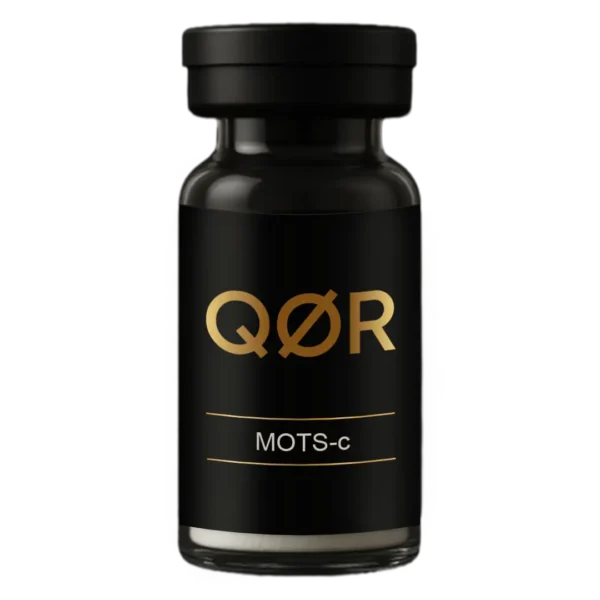
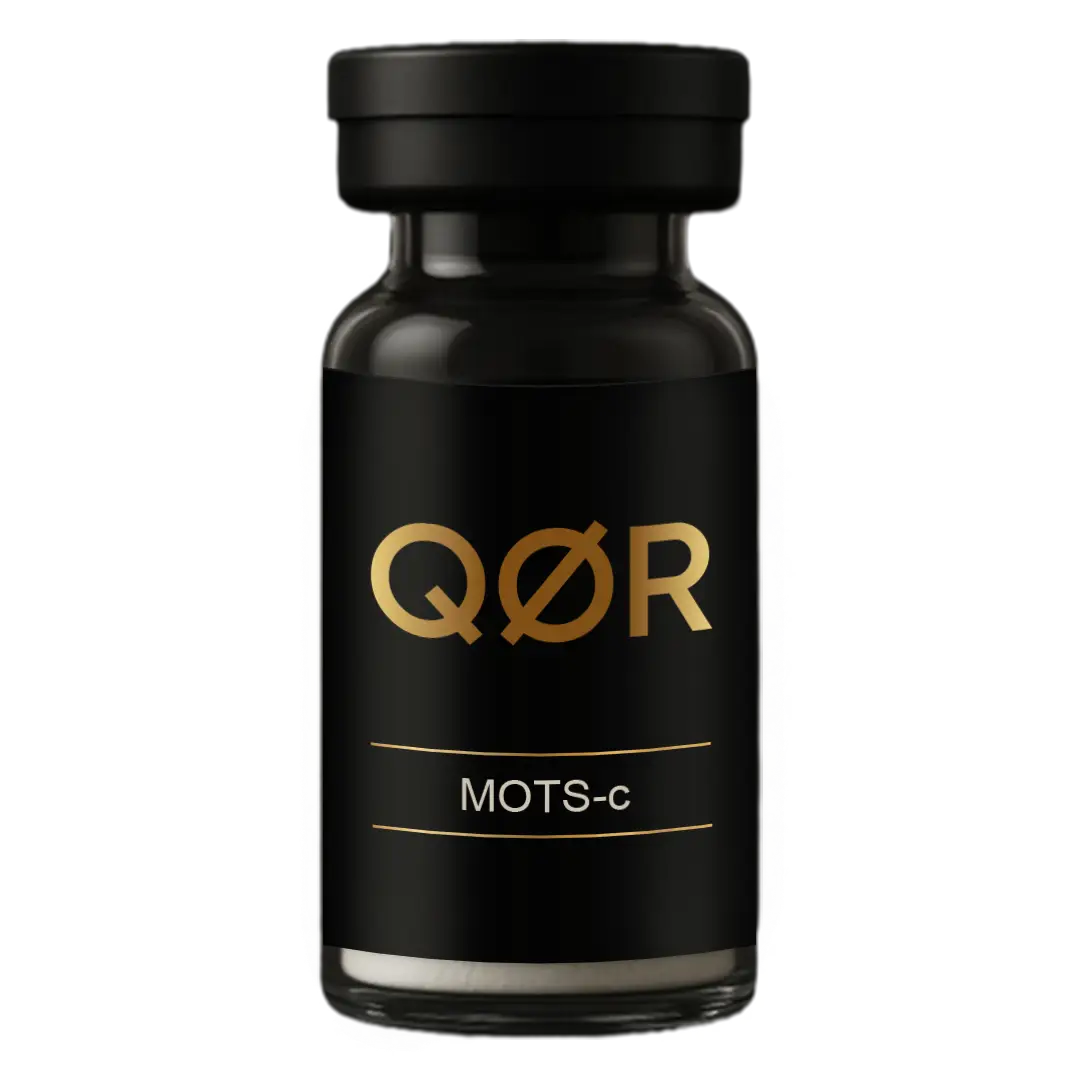
MOTS-c: A mitochondrial-derived peptide used to investigate mitochondrial-to-nuclear communication, AMPK activation, and cellular metabolic homeostasis.
MOTS c is a mitochondrial derived peptide consisting of sixteen amino acids. It is encoded within mitochondrial DNA and produced in mitochondria before engaging cytosolic and nuclear signaling pathways. This material is supplied as a research grade peptide for laboratories that study cellular energy regulation mitochondrial signaling and stress response biology.
Molecular and mechanistic information
MOTS c is categorized as a mitochondrial derived peptide MDP and has been characterized in preclinical work as a regulator of cellular metabolic balance. In experimental systems MOTS c influences glucose handling insulin sensitivity and cellular adaptation to metabolic stress. Under defined stress conditions MOTS c can translocate from mitochondria to the nucleus.
Once in the nucleus it has been shown to modulate expression of genes involved in mitochondrial biogenesis stress resistance and broader metabolic regulation. Researchers use MOTS c to probe how mitochondrial peptides communicate with nuclear transcriptional programs and coordinate whole cell responses to energetic challenge. Cell and animal models have applied MOTS c in studies of exercise capacity body weight regulation insulin signaling skeletal integrity and age associated metabolic changes. These findings position MOTS c as a tool compound for dissecting links among mitochondrial function systemic metabolism and aging biology.
Intended use
This product is intended exclusively for in vitro experiments ex vivo preparations and other controlled laboratory research applications including animal studies conducted under appropriate oversight. Typical uses include cell culture assays of metabolic signaling mitochondrial stress response models and in vivo studies of exercise physiology and glucose homeostasis.
It is not intended for human or veterinary use.
It is not intended for diagnosis treatment cure prevention or mitigation of any disease or age related condition.
It is not a drug food dietary supplement cosmetic or medical device.
Key features
Sixteen amino acid mitochondrial derived peptide suitable for metabolic and mitochondrial signaling research Applicable in studies of glucose metabolism insulin sensitivity cellular stress responses and nuclear gene regulation downstream of mitochondrial cues Manufactured under controlled conditions with analytical verification of identity and purity”
Overview
MOTS c is a sixteen amino acid mitochondrial derived peptide that links mitochondrial status to whole cell and whole body metabolism. It is used in controlled models to study glucose handling fat metabolism skeletal integrity longevity pathways and cardiovascular function. The sections below summarise how MOTS c is applied in preclinical and translational research. All observations are model specific and do not imply any supplement or therapeutic claims.
1. Muscle metabolism and insulin independent glucose uptake
Mouse studies show that MOTS c can reverse age dependent insulin resistance in skeletal muscle. In these experiments MOTS c improves skeletal muscle response to AMPK activation which increases expression and activity of glucose transporters in myofibers. This effect is largely independent of classical insulin receptor signaling.
That makes MOTS c a useful probe when researchers want to isolate non insulin routes of glucose uptake and examine alternative strategies to support muscle glucose disposal under insulin resistant conditions. Functionally these models report better muscle performance and lower indices of functional insulin resistance after MOTS c exposure.
End points include glucose uptake assays ex vivo force measurements and markers of muscle fiber integrity.
2. Fat metabolism mitochondrial signaling and AMPK
Low estrogen models in mice are used to characterise how hormonal shifts drive increases in fat mass and adipose dysfunction. In these settings MOTS c supplementation increases brown adipose activity reduces total adipose accumulation and limits inflammatory changes in white fat depots that usually precede insulin resistance.
Mechanistic work indicates that MOTS c activates AMPK through upstream effects on the methionine folate cycle and elevation of AICAR a known AMPK activator.
Activated AMPK then enhances uptake and oxidation of both glucose and fatty acids mirroring some of the metabolic patterns seen with ketogenic style diets where fat is preferentially oxidised while lean mass is preserved. Metabolomic profiling in obese mouse models links MOTS c to regulation of sphingolipid monoacylglycerol and dicarboxylate pathways. By down regulating these lipid species and increasing beta oxidation MOTS c helps prevent fat accumulation even under high fat diet conditions.
Newer work shows that under metabolic stress MOTS c moves from mitochondria into the nucleus where it regulates nuclear genes involved in glucose restriction and antioxidant responses. This nuclear action supports a two tier model where MOTS c coordinates mitochondrial and nuclear programs to stabilise energy balance.
3. Insulin sensitivity and early metabolic shifts
Human studies measuring circulating MOTS c levels in lean insulin sensitive and insulin resistant subjects reveal that MOTS c correlates with insulin sensitivity primarily in lean individuals. This pattern suggests that MOTS c changes may be more involved in the early pathogenesis of insulin resistance than in its chronic maintenance.
Researchers are exploring MOTS c as a potential biomarker for early dysregulation in lean people moving toward prediabetes. In parallel mouse work supplementation with MOTS c improves insulin sensitivity markers and delays the onset of overt insulin resistance in high risk models. These data are being used to build early intervention frameworks where MOTS c dynamics could signal when metabolic compensation starts to fail.
4. Bone metabolism and osteoporosis models
MOTS c plays a role in bone anabolism in preclinical models. Osteoblast cell line studies show that MOTS c regulates the TGF beta SMAD pathway which is essential for osteoblast survival and function. By supporting osteoblast viability MOTS c increases synthesis of type I collagen the dominant structural protein in bone.
This translates into improved indicators of bone strength and microarchitecture in experimental systems. Further work in osteoporosis models demonstrates that MOTS c promotes differentiation of bone marrow stem cells into osteoblasts again via TGF beta SMAD signaling. So MOTS c both protects existing bone forming cells and drives their formation from progenitors enhancing osteogenesis in these models.
5. Longevity associated variants and population studies
Genetic research has identified a specific MOTS c sequence variant associated with longevity in certain human populations particularly in Northeast Asia. This variant substitutes a glutamate residue for lysine at position fourteen of the peptide. Because glutamate and lysine possess very different chemical properties this substitution is expected to alter peptide structure and function. Although the precise functional consequences are still under investigation the variant’s enrichment in long lived cohorts has made it a focal point for mitochondrial longevity research. This line of work supports the broader view articulated by investigators such as Changhan David Lee that mitochondrial biology including MDPs like MOTS c may hold key levers for extending both lifespan and healthspan.
6. Cardiovascular and endothelial function
Clinical studies measuring MOTS c levels in patients undergoing coronary angiography show that lower circulating MOTS c is associated with higher indices of endothelial dysfunction. Endothelial cells line blood vessels and control vasodilation coagulation and plaque interaction. Rodent experiments indicate that while MOTS c does not dramatically change baseline vascular reactivity it can sensitise endothelial cells to other vasodilatory signals such as acetylcholine. Supplemented animals show improved endothelial function and better microvascular and epicardial vessel performance in functional tests. In parallel work on mitochondrial derived peptides more broadly at least three MDPs appear to protect cardiac cells from stress and inflammation. Dysregulation of these peptides is being examined as a contributor to cardiovascular disease development reperfusion injury and chronic endothelial dysfunction.
Typical research applications
Across the literature MOTS c is commonly used in skeletal muscle metabolism and insulin resistance models obesity and high fat diet studies focused on fat oxidation and lipid profiles AMPK pathway and methionine folate cycle investigations nuclear gene expression studies following metabolic stress insulin sensitivity biomarker and prediabetes research osteoporosis models examining osteoblast survival and stem cell differentiation longevity and population genetics studies on mitochondrial peptides
cardiovascular and endothelial function research. In all these contexts MOTS c is a mechanistic tool for understanding mitochondrial to nuclear communication and metabolic control not a general purpose metabolic or longevity therapy.
Important research disclaimer
All findings summarised here arise from cell culture systems animal models and limited human observational and interventional studies under defined protocols.
They are provided solely to inform qualified researchers about how MOTS c is used in experimental work. These observations do not show or imply that MOTS c is safe or effective for any human or veterinary indication. They are not dosing instructions medical advice or guidance for weight loss diabetes osteoporosis longevity heart disease or any other condition. MOTS c supplied as a research peptide is intended strictly for educational and scientific research. It is not for human or veterinary use and must not be used for diagnosis treatment cure prevention or mitigation of any disease or condition.
Storage Instructions
Store peptides only in professional, controlled environments that operate under their own safety and quality systems. All storage, handling, and disposal must follow your organization’s written policies, risk assessments, and standard operating procedures. It is the responsibility of the facility and its staff to ensure that these policies are in place, understood, and actively followed. Keep vials in a cool, dry location away from direct light, heat, and moisture. Vials should remain upright, sealed, and protected from physical impact so contents and labels stay intact and legible. If your procedures include freezing, use appropriate working volumes and avoid repeated freeze and thaw cycles of the same vial. Do not store peptides near food, drink, or general consumables. Keep them only in designated storage areas with controlled access that reflect your internal governance and regulatory obligations. Handling and preparation must be carried out solely by personnel who are trained and authorized under your institutional guidelines.
Intended use
This product is intended exclusively for in vitro experiments ex vivo preparations and other controlled laboratory research applications including animal studies conducted under appropriate oversight. Typical uses include cell culture assays biochemical experiments on copper binding and transport and investigations of extracellular matrix remodeling and tissue biology.
It is not intended for human or veterinary use.
It is not intended for diagnosis treatment cure prevention or mitigation of any disease or cosmetic condition.
It is not a drug food dietary supplement cosmetic ingredient or medical device.”
$180.00–$295.00Price range: $180.00 through $295.00
Retatrutide: A triple receptor agonist (GLP-1, GIP, and glucagon) intended for research into metabolic signaling, glucose regulation, and energy balance.
TB 500: A synthetic form of Thymosin Beta-4 used as a tool to study G-actin sequestration, cytoskeletal dynamics, and vascular remodeling in tissue models.
Recently viewed
What our customers say about us
Private research laboratory
QØR has supplied us with consistent reference materials and clear batch documentation across multiple orders which supports our internal assay validation work
Academic research center
From ordering through delivery, communication and documentation have met our institutional expectations for research materials procurement.
Private Research Organization
Consistent batch records and clear technical communication support our internal quality requirements.
Academic Research Center
Documentation was complete, packaging was appropriate for our facility, and delivery aligned with our internal timelines.