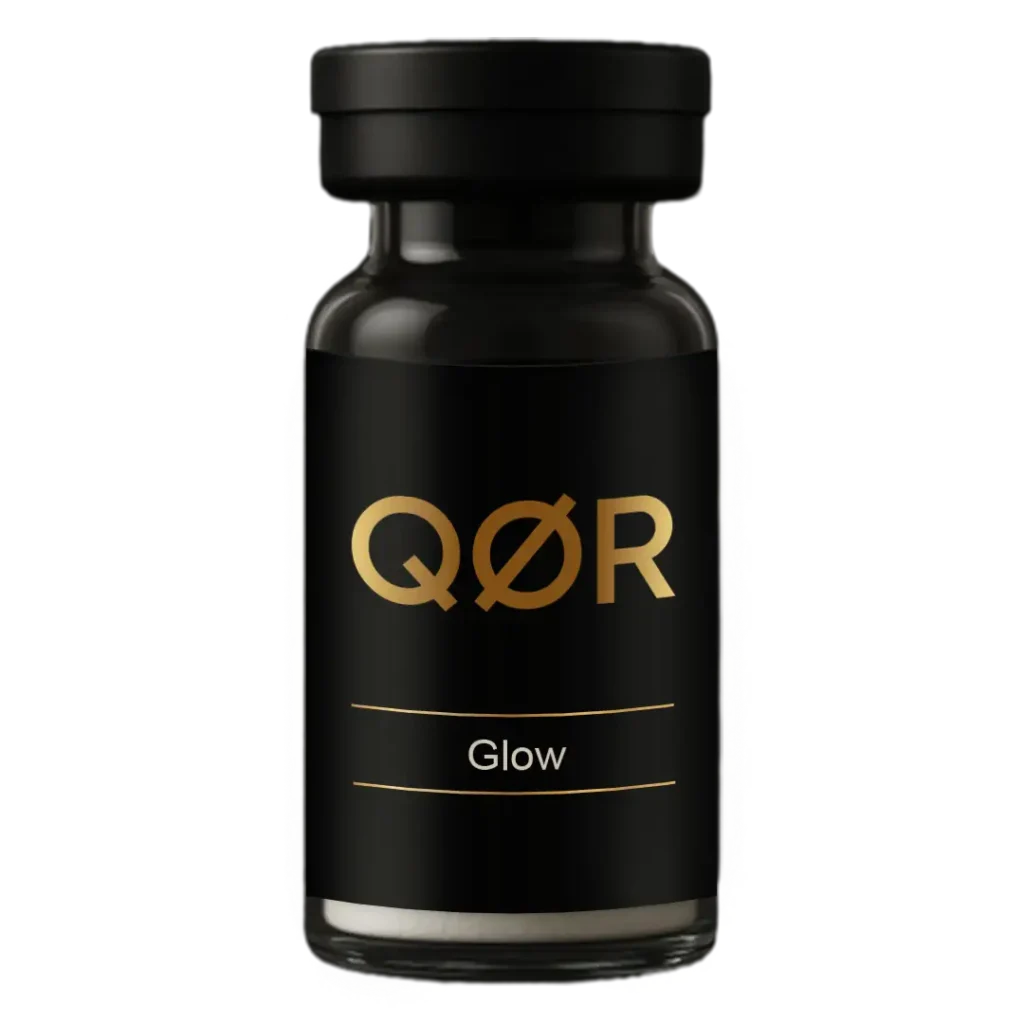
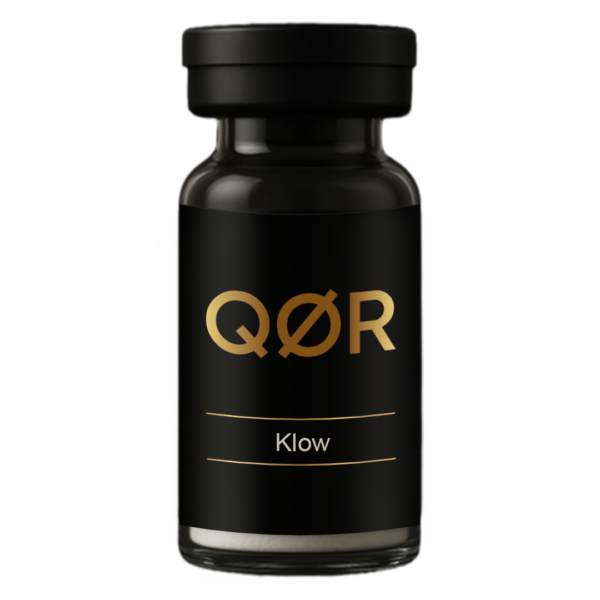
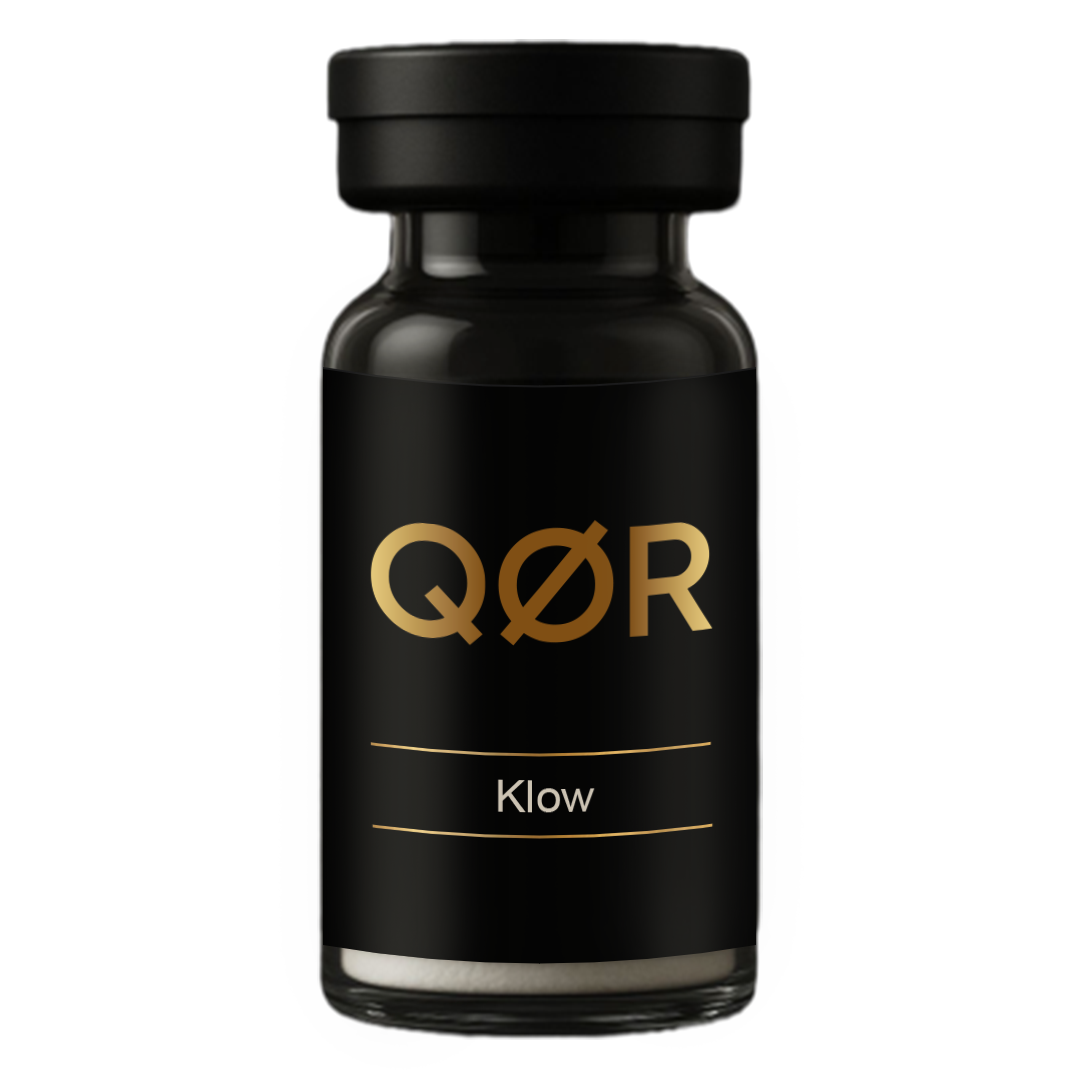
KLOW Blend es una formulación de investigación multicomponente que combina cuatro péptidos bien caracterizados
BPC 157
TB 500 Timosina Beta 4
Ac KPV NH2
GHK Cu tripéptido complejo de cobre
Se suministra como mezcla de grado de investigación para laboratorios que deseen estudiar mecanismos convergentes de protección tisular, control de la inflamación y señalización regenerativa utilizando una única preparación consolidada.
Información molecular y mecanística
Cada péptido constituyente ha sido investigado de forma independiente en modelos preclínicos: BPC 157 en investigación de integridad del tejido gastrointestinal y cicatrización de heridas
TB 500 Timosina Beta 4 en investigación de regulación del citoesqueleto de actina, migración celular y reparación tisular; Ac KPV NH2 en investigación de señalización inflamatoria, transporte epitelial y vías asociadas a citocinas; GHK Cu en investigación del comportamiento de fibroblastos, biología de la matriz extracelular, angiogénesis y señalización dependiente de cobre. Aunque existe solapamiento temático en áreas como citoprotección, modulación inmunitaria, soporte angiogénico y remodelación de la matriz, los péptidos actúan a través de dianas moleculares y vías distintas. Combinarlos en una única formulación permite a los investigadores examinar cómo interactúan estas vías en entornos tisulares complejos y si la señalización en capas produce efectos aditivos o sinérgicos sobre la cinética de curación, la arquitectura tisular y la recuperación funcional en sistemas modelo. Esta mezcla está destinada a simplificar diseños experimentales multibrazo donde la alternativa sería la preparación y administración separada de cada péptido. Al consolidar cuatro agentes en un solo vial, los laboratorios pueden centrar la atención en la interrogación mecanística, el perfilado de biomarcadores y la medición de resultados, reduciendo al mismo tiempo la complejidad logística.
Uso previsto
KLOW Blend está destinado exclusivamente a experimentos in vitro, preparaciones ex vivo y otras aplicaciones de investigación de laboratorio controladas, incluidos estudios en animales realizados bajo la supervisión apropiada. Los usos típicos incluyen modelos multidimensionales de cicatrización de heridas, paradigmas de lesión de tejido compuesto, estudios de reparación específicos de órganos y ensayos in vitro que requieren exposición simultánea a múltiples señales peptídicas.
No está destinado para uso humano ni veterinario.
No está destinado para el diagnóstico, tratamiento, cura, prevención o mitigación de ninguna enfermedad, problema cosmético o afección médica.
No es un medicamento, alimento, complemento alimenticio, cosmético ni dispositivo médico.
Características principales
Formulación de cuatro péptidos: BPC 157, TB 500 Timosina Beta 4, Ac KPV NH2 y GHK Cu en un único vial de investigación
Diseñado para estudios de efectos combinados sobre reparación tisular, señalización inflamatoria, angiogénesis y remodelación de la matriz
Reduce la necesidad de protocolos separados de manipulación y dosificación de péptidos en diseños experimentales complejos
Fabricado en condiciones controladas con verificación analítica de identidad y pureza de componentes individuales y composición de la mezcla
Overview
KLOW Blend combines four peptides that are each widely studied in tissue repair and inflammation models
BPC 157
TB 500 Thymosin Beta 4
Ac KPV NH2
GHK Cu
Research on this blend focuses on how these distinct pathways behave when activated together in the same system.
The aim is to understand convergence effects on healing speed tissue architecture and durability of repair under controlled conditions.
1. Rationale for multi peptide tissue repair models
BPC 157 is used in gastrointestinal and soft tissue models that examine integrity barrier function and repair kinetics. TB 500 Thymosin Beta 4 is a core tool in cytoskeletal research and cell migration particularly where actin dynamics underpin wound closure and angiogenesis. Ac KPV NH2 is deployed in inflammatory and epithelial transport assays where investigators track cytokine networks and barrier responses. GHK Cu is a standard reagent in fibroblast and endothelial research where extracellular matrix production angiogenesis and copper dependent signaling are central. KLOW Blend enables experiments where all four signals are present at once. This allows researchers to map how growth of new vessels matrix remodeling epithelial barrier regulation and inflammatory resolution interact in the same injury model rather than in separate single peptide studies.
2. Wound healing and composite injury paradigms
In advanced wound models investigators often need to account for overlapping biology hemostasis and early inflammation fibroblast recruitment and collagen deposition re epithelialisation angiogenesis and long term remodeling. Using KLOW Blend, labs can design protocols where each of these phases is exposed to a consistent multi peptide environment.
Readouts commonly include
closure rate histologic scoring of granulation tissue and collagen organisation re epithelialisation depth capillary density and pericyte coverage local cytokine and chemokine profiles. Comparisons are then made between single component arms and the KLOW combination to detect additive or cooperative effects on structure and function.
3. Angiogenesis and microvascular quality
TB 500 and GHK Cu are both used independently in angiogenesis assays. With KLOW Blend, endothelial and pericyte co culture systems can be exposed to a matrix environment that also contains BPC 157 and KPV driven signals.
Typical endpoints
tube formation metrics and branching complexity
endothelial barrier resistance
expression of angiogenic factors and matrix metalloproteinases
pericyte recruitment and vessel stabilisation markers.
The goal is to see whether a multi signal environment produces vessels that are not only more numerous but also more stable and better integrated into surrounding tissue constructs.
4. Inflammation and epithelial barrier research
KPV and BPC 157 are often used in models that focus on mucosal and epithelial surfaces. GHK Cu and TB 500 contribute additional inputs on fibroblast behaviour and local matrix context. In KLOW Blend experiments, researchers can explore how epithelial transporters and tight junction proteins respond under inflammatory challenge whether combined peptide exposure shifts cytokine balance and leukocyte trafficking how stromal cells remodel the extracellular matrix around epithelial layers. This is particularly useful in gut, skin and corneal models where barrier integrity, local inflammation and stromal repair need to be evaluated together.
5. Matrix remodeling and long term tissue quality
GHK Cu and TB 500 sit at the centre of extracellular matrix and cytoskeletal research. Paired with BPC 157 and KPV, KLOW Blend allows for extended observation of how tissues remodel over longer time frames beyond initial closure.
Key measures
collagen type ratios and fibre alignment scar thickness versus normal tissue mechanical strength testing in tendons or skin strips expression of remodeling associated enzymes and inhibitors. These models inform whether a multi peptide environment shifts outcomes toward more organised, functionally resilient tissue compared with standard single peptide or saline controls.
6. Experimental design and logistics advantages
Multi arm studies that test several peptides alone and in combination quickly become complex in terms of preparation and dosing. KLOW Blend was created to reduce that complexity when the scientific question is specifically about convergence of these four signals. By consolidating them into one vial, investigators can
standardise dosing schedules more easily reduce preparation error risk allocate more resources to deep biomarker analysis and imaging. This does not replace single peptide or pairwise studies. Instead it provides a higher level tool when the objective is to test a multi pathway repair stimulus as a unified exposure condition.
Typical research applications
Across labs KLOW Blend is suited to complex wound and surgical repair models tendon and ligament injury systems that require both angiogenesis and matrix remodeling
composite epithelial barrier plus stromal co culture setups comparative studies of mono versus multi peptide exposure in tissue regeneration workflows. In every case KLOW Blend is a platform for investigating how BPC 157, TB 500, KPV and GHK Cu behave together, not a finished therapeutic product. Important research disclaimer
All uses described here refer to controlled in vitro systems, ex vivo preparations and animal models. They are presented only to inform qualified researchers about how a multi peptide blend can be positioned for mechanistic work. These observations do not show or imply that KLOW Blend or its components are safe or effective for any human or veterinary indication. They are not dosing instructions, medical advice or guidance for cosmetic, performance or therapeutic use. KLOW Blend is intended strictly for laboratory research applications. It is not for human or veterinary use and must not be used for diagnosis, treatment, cure, prevention or mitigation of any disease or condition.
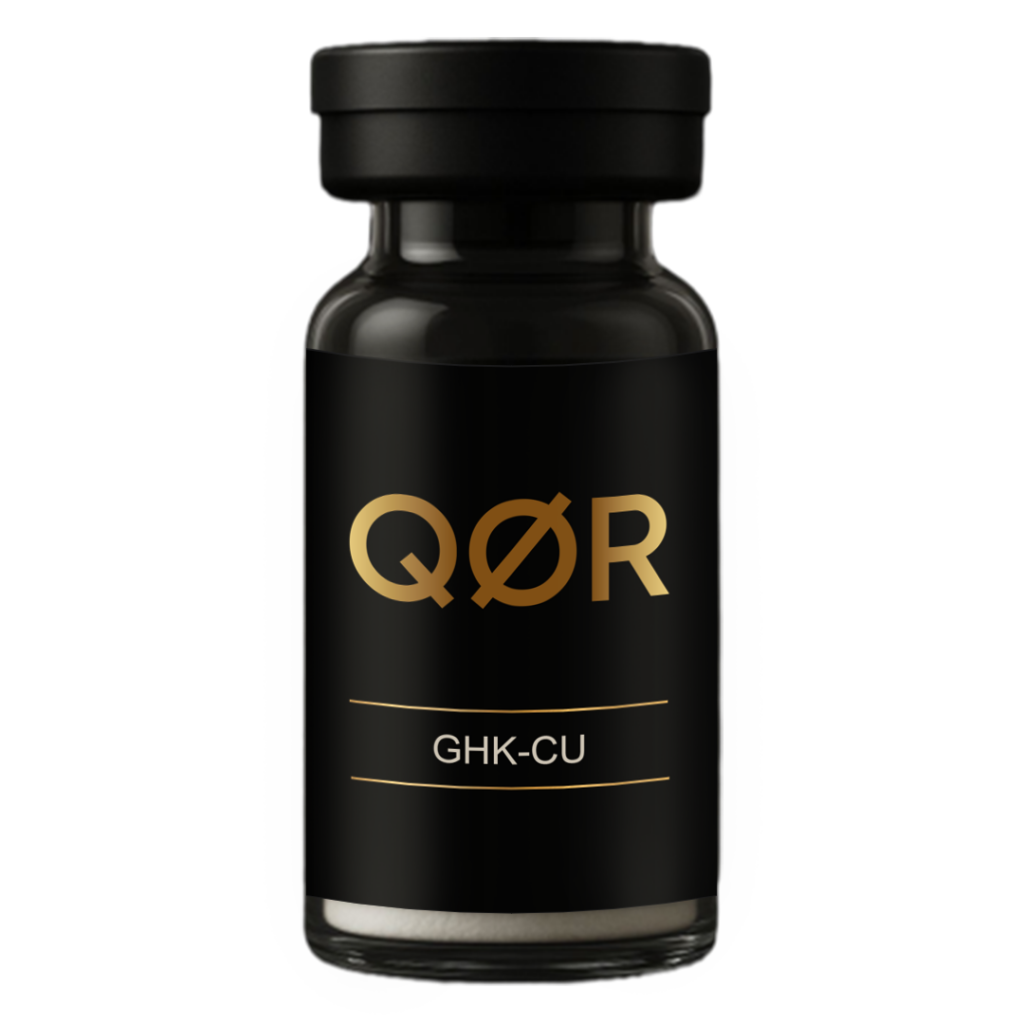
GHK-Cu 100 mg: Un complejo tripéptido-cobre utilizado en investigación de cultivo celular para estudiar la remodelación de la matriz extracelular, la angiogénesis y la señalización dependiente de cobre.
$175.00-$275.00Rango de precios: desde $175.00 hasta $275.00
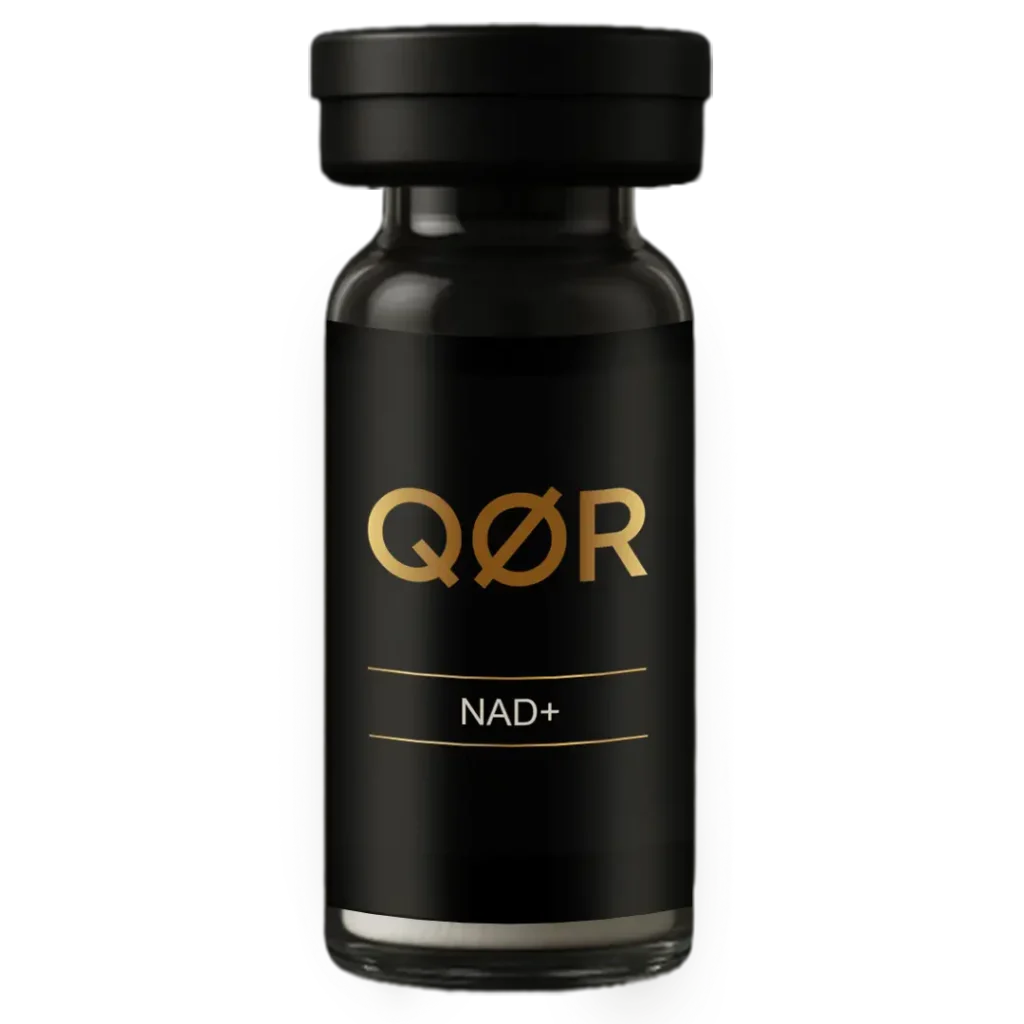
NAD: Una coenzima metabólica central utilizada en ensayos de laboratorio para estudiar la bioenergética mitocondrial, la actividad de las sirtuinas y las vías de señalización dependientes de NAD.
Vistos recientemente
Lo que nuestros clientes dicen de nosotros
Laboratorio de investigación privado
QØR nos ha suministrado materiales de referencia consistentes y documentación de lote clara en múltiples pedidos, lo que respalda nuestro trabajo interno de validación de ensayos
Centro de investigación académica
Desde el pedido hasta la entrega, la comunicación y la documentación han cumplido nuestras expectativas institucionales para la adquisición de materiales de investigación.
Organización privada de investigación
Registros de lote coherentes y una comunicación técnica clara respaldan nuestros requisitos internos de calidad.
Centro de Investigación Académica
La documentación estaba completa, el embalaje era adecuado para nuestras instalaciones y la entrega se ajustó a nuestros plazos internos.