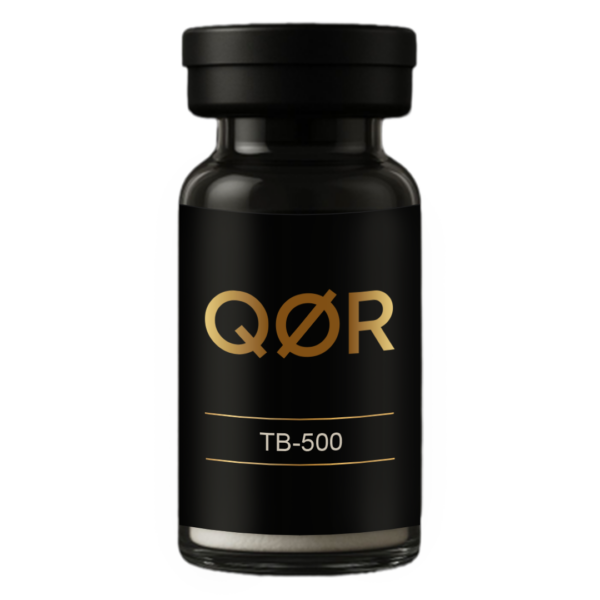
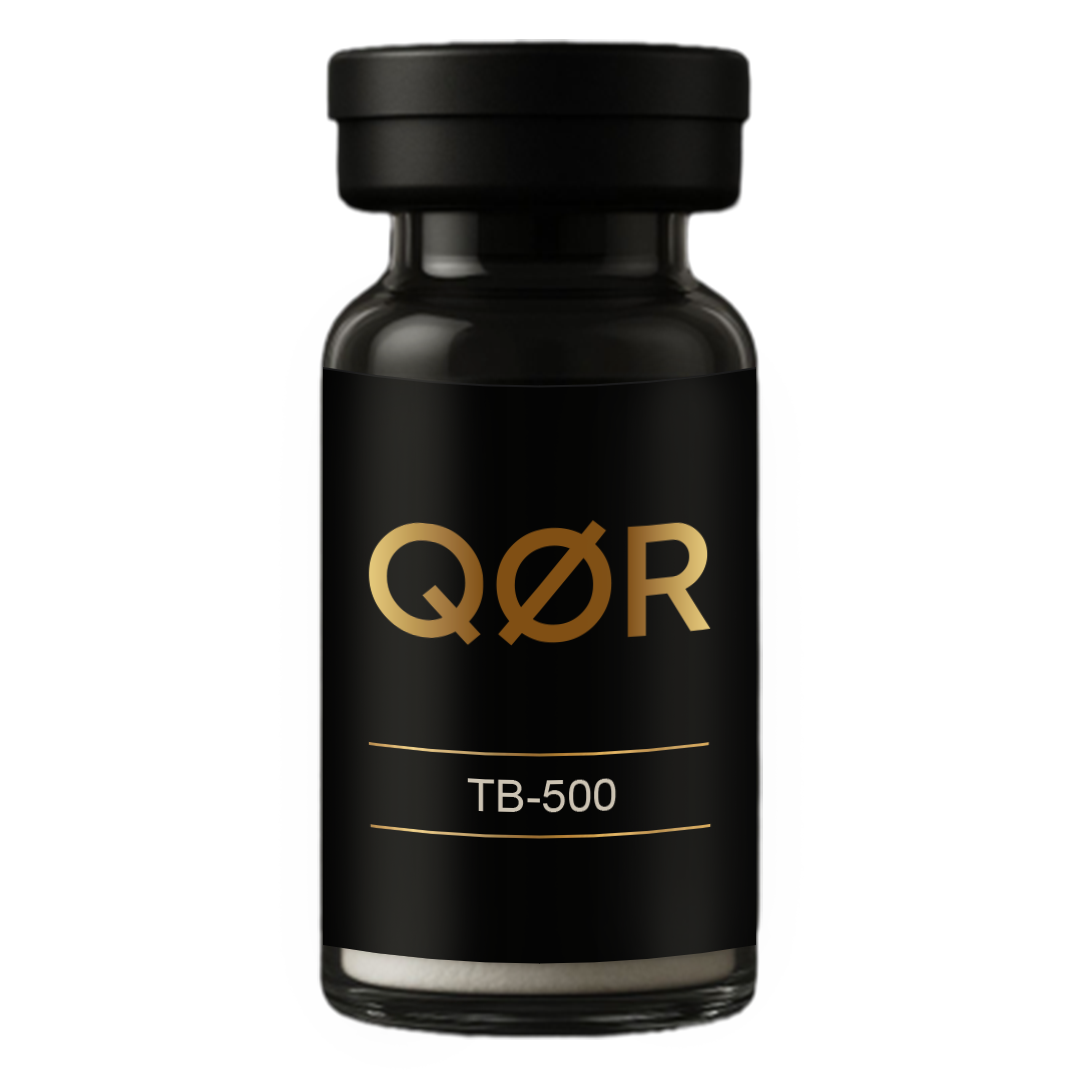
TB 500: A synthetic form of Thymosin Beta-4 used as a tool to study G-actin sequestration, cytoskeletal dynamics, and vascular remodeling in tissue models.
TB 500 is the synthetic research form of Thymosin Beta 4 a forty three amino acid peptide originally identified in thymus derived extracts and cytoskeletal protein studies.
It is supplied as a research grade peptide for laboratories that investigate cytoskeletal regulation tissue repair pathways and injury related signaling in cell and animal models.
Molecular and mechanistic information
Thymosin Beta 4 is a prominent G actin binding peptide that participates in actin sequestration and cytoskeletal dynamics in mammalian cells. In experimental systems it is used as a tool compound to study how actin remodeling integrates with cell migration angiogenesis inflammation and tissue repair processes. Preclinical work has examined TB 500 Thymosin Beta 4 in models that track blood vessel growth wound closure rates inflammatory signaling profiles and markers of oxidative damage in cardiac central nervous system and peripheral tissues.
These studies position TB 500 as a versatile peptide probe for exploring protection tissue repair regeneration and remodeling of injured or stressed tissues under controlled conditions.
Intended use
This product is intended exclusively for in vitro experiments ex vivo preparations and other controlled laboratory research applications including animal studies under appropriate oversight. Typical uses include cell migration assays angiogenesis models wound healing paradigms cytoskeletal biology research and organ specific injury models.
It is not intended for human or veterinary use.
It is not intended for diagnosis treatment cure prevention or mitigation of any disease or medical condition.
It is not a drug food dietary supplement cosmetic or medical device.
Key features
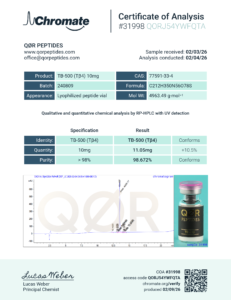
Synthetic forty three amino acid Thymosin Beta 4 sequence suitable for tissue repair and cytoskeletal research Applicable in studies of blood vessel growth wound healing inflammation and oxidative stress in heart brain and peripheral tissues Manufactured under controlled conditions with analytical verification of identity and purity
Overview
TB 500 is the research form of Thymosin Beta 4 a forty three amino acid actin binding peptide. It is used in controlled models to study cytoskeletal dynamics tissue repair pathways angiogenesis inflammation and oxidative stress across multiple organ systems. The section below reframes the literature as context for how TB 500 is used as a tool compound. Nothing here is a usage claim and none of it should be read as guidance for clinical or cosmetic application.
1. Neurologic function and neural repair
In rodent models TB 500 has been investigated for its impact on both central and peripheral nervous system repair after injury. Studies show that Thymosin Beta 4 can activate support cells that surround and sustain neurons including oligodendrocytes and related glial populations. Activation of these support cells is associated with increased blood vessel formation and neuronal growth within injured brain regions. Behavioral testing in these models reports improvements in motor control behavior and cognitive performance that parallel the structural findings. Additional research in spinal cord injury models demonstrates that TB 500 can reduce oxidative stress markers and enhance survival of transplanted neural stem and progenitor cells. In those settings improved survival of neural precursors is linked to more robust spinal regeneration readouts positioning TB 500 as a probe for spinal cord recovery mechanisms.
2. Blood vessel growth and angiogenesis
TB 500 and Thymosin Beta 4 have been shown to upregulate vascular endothelial growth factor expression in multiple systems. VEGF is a key signaling molecule for capillary growth which is central to wound closure tissue perfusion and other regenerative processes. Beyond VEGF induction research suggests that Thymosin Beta 4 participates at several steps of vascular development including extracellular matrix remodeling vasculogenesis angiogenesis and the transition from mesenchymal cell types to specialized endothelial lineage. Loss of Thymosin Beta 4 in genetic models interferes with blood vessel formation and stability while exogenous administration improves capillary density and pericyte recruitment after injury. These findings make TB 500 a core tool for mapping how cytoskeletal regulation intersects with vascular development and maintenance.
3. Hair growth and follicle biology
Hair growth effects of Thymosin Beta 4 were identified incidentally in mouse models.
Mice genetically deficient in Thymosin Beta 4 showed markedly delayed hair regrowth after shaving compared with wild type controls. Conversely mice engineered to overexpress Thymosin Beta 4 displayed faster hair regrowth increased numbers of hair shafts and grouped follicles under histologic examination. These observations support the use of TB 500 in mechanistic studies of hair follicle cycling stem cell niches and dermal papilla interactions.
4. Antibiotic synergy and host response in infection
Multi drug resistant infections have prompted interest in host directed adjuncts that can augment existing antibiotics. In a Pseudomonas aeruginosa corneal infection model TB 4 and related peptides were tested in combination with ciprofloxacin. Mice receiving the combination showed lower bacterial colony forming units reduced neutrophil infiltration decreased reactive oxygen species and lower nitrate levels in corneal tissue compared with antibiotic alone. These data suggest that Thymosin Beta 4 based peptides can modify host inflammatory responses and improve clearance dynamics when paired with conventional antimicrobial agents.
Researchers use TB 500 in this context to study antibiotic synergy and innate immune modulation rather than as a stand alone antimicrobial.
5. Cardiovascular and renal system research
Two decades of work link Thymosin Beta 4 derivatives with multiple cardiovascular and renal endpoints. Mechanistic studies point to several concurrent actions including promotion of collateral vessel growth support of endothelial cell migration and enhancement of cardiomyocyte survival after ischemic injury. TB 500 appears to work with endogenous signaling molecules to reduce inflammation and limit fibrosis in heart and kidney models. Hydrogel systems containing collagen and Thymosin Beta 4 have been used to deliver the peptide locally to injured myocardium where they promote angiogenesis epicardial cell migration and improved functional recovery after ischemia while lowering scar burden. These models position TB 500 as a versatile tool for dissecting relationships among vascular growth inflammation fibrosis and organ repair.
6. Neurodegenerative disease and autophagy
Neurodegenerative conditions such as prion disease and Alzheimer type pathology involve accumulation of misfolded proteins in the central nervous system.
Recent work indicates that Thymosin Beta 4 can enhance autophagy the main intracellular pathway for degrading misfolded proteins in neurons. In prion related models augmentation of autophagic flux by Thymosin Beta 4 is associated with improved clearance of pathogenic protein species. This line of research uses TB 500 to probe how boosting intrinsic clearance pathways may alter progression of neurodegenerative processes.
7. Broad research applications and pharmacologic profile
Because Thymosin Beta 4 influences actin dynamics a fundamental aspect of cell structure TB 500 research spans many tissues including heart brain skeletal muscle skin cornea and kidney. Studies report minimal adverse findings in animal models along with low oral and high subcutaneous bioavailability in mice. Importantly dose levels used in mice do not scale linearly to humans which is why TB 500 remains confined to educational and scientific research settings. Work continues across multiple domains from cardiac and neurologic disease to antibiotic adjunct strategies making TB 500 one of the more intensively studied peptides in current preclinical research.
Typical research applications
Across the literature TB 500 is commonly used in central and peripheral nervous system injury and repair models angiogenesis and vascular remodeling studies hair follicle cycling and dermal regeneration research infection models examining antibiotic synergy and host response cardiovascular and renal injury repair and fibrosis studies
neurodegenerative disease models focused on autophagy and protein clearance. In all of these contexts TB 500 functions as a mechanistic research tool not as a finished therapeutic agent.
Important research disclaimer
All findings summarised here arise from in vitro systems animal models and early translational studies under defined protocols. They are provided only to inform qualified researchers about how TB 500 and Thymosin Beta 4 are applied in experimental work. These observations do not demonstrate or imply that TB 500 is safe or effective for any human or veterinary indication. They are not dosing instructions medical advice or guidance for treatment of injury infection cardiac disease neurodegeneration hair loss or any other condition. TB 500 available from a research supplier is intended strictly for laboratory research use.
It is not for human or veterinary use and must not be used for diagnosis treatment cure prevention or mitigation of any disease or condition.
Store peptides only in professional, controlled environments that operate under their own safety and quality systems. All storage, handling, and disposal must follow your organization’s written policies, risk assessments, and standard operating procedures. It is the responsibility of the facility and its staff to ensure that these policies are in place, understood, and actively followed. Keep vials in a cool, dry location away from direct light, heat, and moisture. Vials should remain upright, sealed, and protected from physical impact so contents and labels stay intact and legible. If your procedures include freezing, use appropriate working volumes and avoid repeated freeze and thaw cycles of the same vial. Do not store peptides near food, drink, or general consumables. Keep them only in designated storage areas with controlled access that reflect your internal governance and regulatory obligations. Handling and preparation must be carried out solely by personnel who are trained and authorized under your institutional guidelines.
Intended use
This product is intended exclusively for in vitro experiments ex vivo preparations and other controlled laboratory research applications including animal studies conducted under appropriate oversight. Typical uses include cell culture assays biochemical experiments on copper binding and transport and investigations of extracellular matrix remodeling and tissue biology. It is not intended for human or veterinary use. It is not intended for diagnosis treatment cure prevention or mitigation of any disease or cosmetic condition. It is not a drug food dietary supplement cosmetic ingredient or medical device.
Retatrutide: A triple receptor agonist (GLP-1, GIP, and glucagon) intended for research into metabolic signaling, glucose regulation, and energy balance.
Tesamorelin: A 44-amino acid GHRH analogue used to investigate growth hormone axis regulation, visceral adiposity, and neuroendocrine-metabolic interactions.
MOTS-c: A mitochondrial-derived peptide used to investigate mitochondrial-to-nuclear communication, AMPK activation, and cellular metabolic homeostasis.
Recently viewed
What our customers say about us
Academic Research Center
Documentation was complete, packaging was appropriate for our facility, and delivery aligned with our internal timelines.
Private Research Organization
Consistent batch records and clear technical communication support our internal quality requirements.
Academic research center
From ordering through delivery, communication and documentation have met our institutional expectations for research materials procurement.
Private research laboratory
QØR has supplied us with consistent reference materials and clear batch documentation across multiple orders, supporting our in-house assay validation work