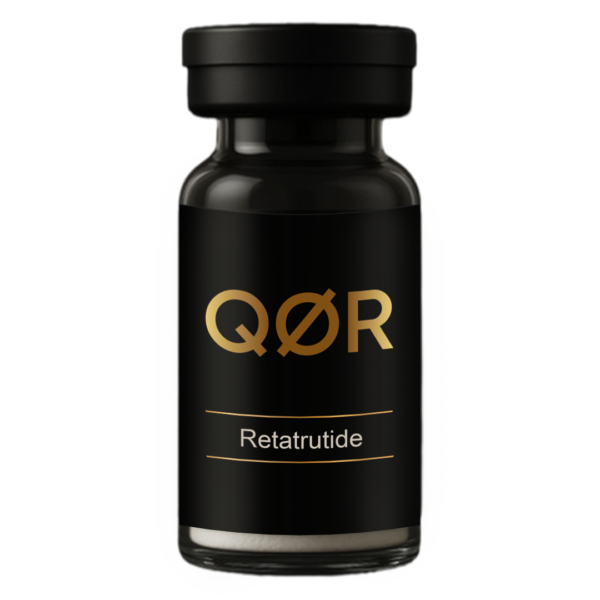
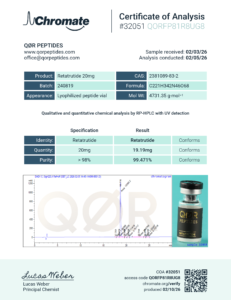
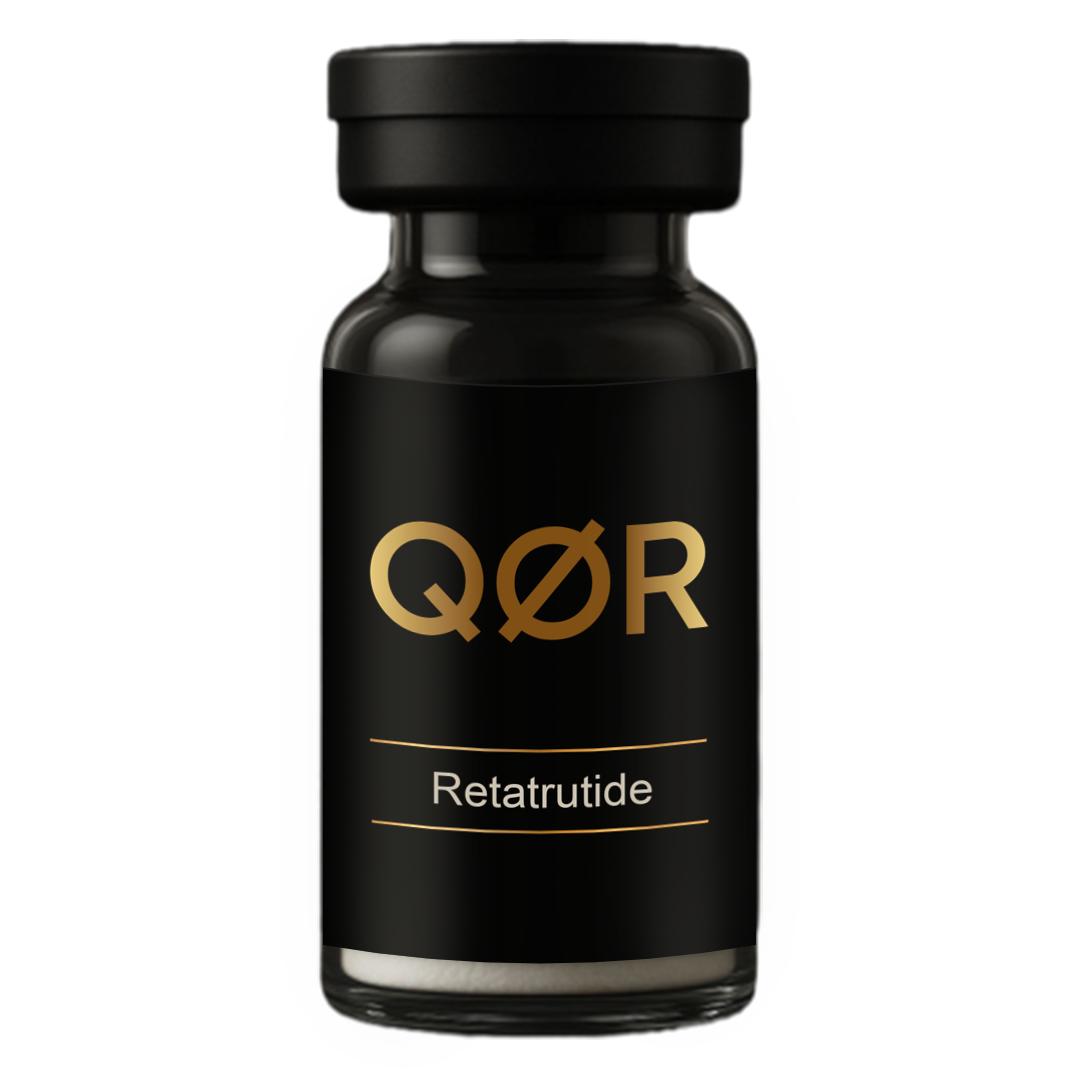
Retatrutide: A triple receptor agonist (GLP-1, GIP, and glucagon) intended for research into metabolic signaling, glucose regulation, and energy balance.
$150.00–$350.00Price range: $150.00 through $350.00
Retatrutide also known as LY3437943 is a synthetic peptide that has been developed as a triple receptor agonist at the glucagon like peptide 1 receptor the glucose dependent insulinotropic polypeptide receptor and the glucagon receptor. It is supplied as a research grade material intended for use in metabolic and endocrinology focused laboratory studies.
Molecular and pharmacologic information
Retatrutide is a peptide based agonist engineered to interact with three peptide hormone receptor systems that are central to energy balance and glucose regulation research.
The molecule has been constructed to exhibit activity at GLP 1 receptors GIP receptors and glucagon receptors and has been evaluated in controlled preclinical and clinical research settings as part of drug development programs. This product is provided as a lyophilised powder for reconstitution by qualified laboratory personnel using appropriate sterile technique. Typical analytical characterisation may include purity assessment by chromatographic methods identity confirmation by mass spectrometry and additional quality attributes such as water content and endotoxin levels where applicable.
Intended use
This material is intended solely for in vitro experiments ex vivo assays and other non human laboratory research applications. It may be used as a reference standard or tool compound in studies involving peptide receptor pharmacology metabolic pathway analysis or related fields. It is not intended for human or veterinary use. It is not intended for diagnosis treatment cure prevention or mitigation of any disease or medical condition.It is not a drug food dietary supplement cosmetic or medical device and must not be used as such.
Key features
Synthetic triple receptor agonist targeting GLP 1 GIP and glucagon receptors for use as a research tool Manufactured under controlled conditions with third party verification of identity and purity Suitable for use in metabolic endocrinology and receptor pharmacology research where a well characterised multi agonist peptide is required.
Overview
Retatrutide also known as LY3437943 is a triple receptor agonist that engages GLP 1 GIP and glucagon receptors. These pathways are central to scientific investigations in obesity glucose regulation lipid handling and broader cardiometabolic physiology. The information in this section summarises how Retatrutide has been used as a tool compound in preclinical and clinical research. All findings are study specific and do not establish safety or efficacy for any therapeutic use.
1. Metabolic and obesity model research
Retatrutide has been evaluated in controlled models that investigate body weight regulation energy balance and adipose tissue biology.
Researchers have compared its effects with other incretin based agents using endpoints such as total weight change distribution between fat mass and lean mass and changes in visceral adiposity. These studies position Retatrutide as a useful probe for understanding how combined GLP 1 GIP and glucagon receptor activation can influence energy intake and expenditure in obesity focused models. In this context it is often used alongside body composition imaging techniques and detailed monitoring of food intake and activity patterns.
2. NAFLD and hepatic lipid studies
Non alcoholic fatty liver disease and related hepatic conditions represent a major focus in metabolic research. Retatrutide has been incorporated into preclinical models that measure intrahepatic lipid content serum triglycerides and other lipid fractions. By comparing Retatrutide with single and dual agonist compounds researchers examine how triple receptor agonism may affect liver fat accumulation and clearance. These experiments frequently combine imaging methods biochemical assays and histological evaluation to characterise changes in liver tissue under controlled exposure conditions.
3. Insulin sensitivity and glucose homeostasis
Retatrutide has been used in models of impaired glucose tolerance and insulin resistance to explore its impact on glucose handling. Endpoints in these studies include fasting and post challenge glucose levels insulin secretion patterns and composite indices of insulin sensitivity. Techniques such as hyperinsulinemic euglycemic clamps oral glucose tolerance testing and continuous glucose monitoring are commonly employed. This allows investigators to dissect the relative contribution of GLP 1 GIP and glucagon pathways to changes in glucose uptake hepatic output and peripheral insulin action.
4. Comparative metabolic analyses
Because Retatrutide targets three receptor systems simultaneously it is frequently included in comparative studies with GLP 1 mono agonists and dual incretin agonists.
These analyses look across multiple metabolic domains including body weight glycemic control lipid parameters and body composition.
Such head to head studies help clarify how receptor selectivity potency and pharmacokinetics translate into different patterns of metabolic response in animal models and early phase clinical trials. Retatrutide serves as a benchmark compound for testing hypotheses about the potential advantages and tradeoffs of broader receptor engagement.
Typical research applications
Common research use cases for Retatrutide include obesity model studies NAFLD and hepatic steatosis research insulin sensitivity and glucose clamp assays
comparative metabolic investigations alongside other incretin based agents. In all cases Retatrutide is used as a laboratory tool compound within defined protocols under the supervision of qualified investigators.
Important research disclaimer
All observations described in this section arise from controlled laboratory experiments and regulated clinical studies. They are presented solely to inform researchers about how Retatrutide has been applied in scientific settings. These findings do not constitute and must not be interpreted as claims that this product is safe or effective for weight loss NAFLD diabetes or any other indication. They are not dosing instructions medical advice or guidance for clinical use. Retatrutide supplied by us is intended strictly for laboratory research applications. It is not for human or veterinary use and must not be used for diagnosis treatment cure prevention or mitigation of any disease or condition.
Store peptides only in professional, controlled environments that operate under their own safety and quality systems. All storage, handling, and disposal must follow your organization’s written policies, risk assessments, and standard operating procedures. It is the responsibility of the facility and its staff to ensure that these policies are in place, understood, and actively followed. Keep vials in a cool, dry location away from direct light, heat, and moisture. Vials should remain upright, sealed, and protected from physical impact so contents and labels stay intact and legible. If your procedures include freezing, use appropriate working volumes and avoid repeated freeze and thaw cycles of the same vial. Do not store peptides near food, drink, or general consumables. Keep them only in designated storage areas with controlled access that reflect your internal governance and regulatory obligations. Handling and preparation must be carried out solely by personnel who are trained and authorized under your institutional guidelines.
Intended use
This product is intended exclusively for in vitro experiments ex vivo preparations and other controlled laboratory research applications including animal studies conducted under appropriate oversight. Typical uses include cell culture assays biochemical experiments on copper binding and transport and investigations of extracellular matrix remodeling and tissue biology.
It is not intended for human or veterinary use. It is not intended for diagnosis treatment cure prevention or mitigation of any disease or cosmetic condition.
It is not a drug food dietary supplement cosmetic ingredient or medical device.
Semax 10mg: An ACTH-derived heptapeptide used as a tool compound to study neurotrophic signaling, BDNF expression, and neuronal plasticity in CNS models.
GLOW Blend: A consolidated research formulation of BPC 157 (10mg), TB 500 (10mg), and GHK-Cu (50mg).
Recently viewed
What our customers say about us
Academic Research Center
Documentation was complete, packaging was appropriate for our facility, and delivery aligned with our internal timelines.
Private Research Organization
Consistent batch records and clear technical communication support our internal quality requirements.
Academic research center
From ordering through delivery, communication and documentation have met our institutional expectations for research materials procurement.
Private research laboratory
QØR has supplied us with consistent reference materials and clear batch documentation across multiple orders, supporting our in-house assay validation work