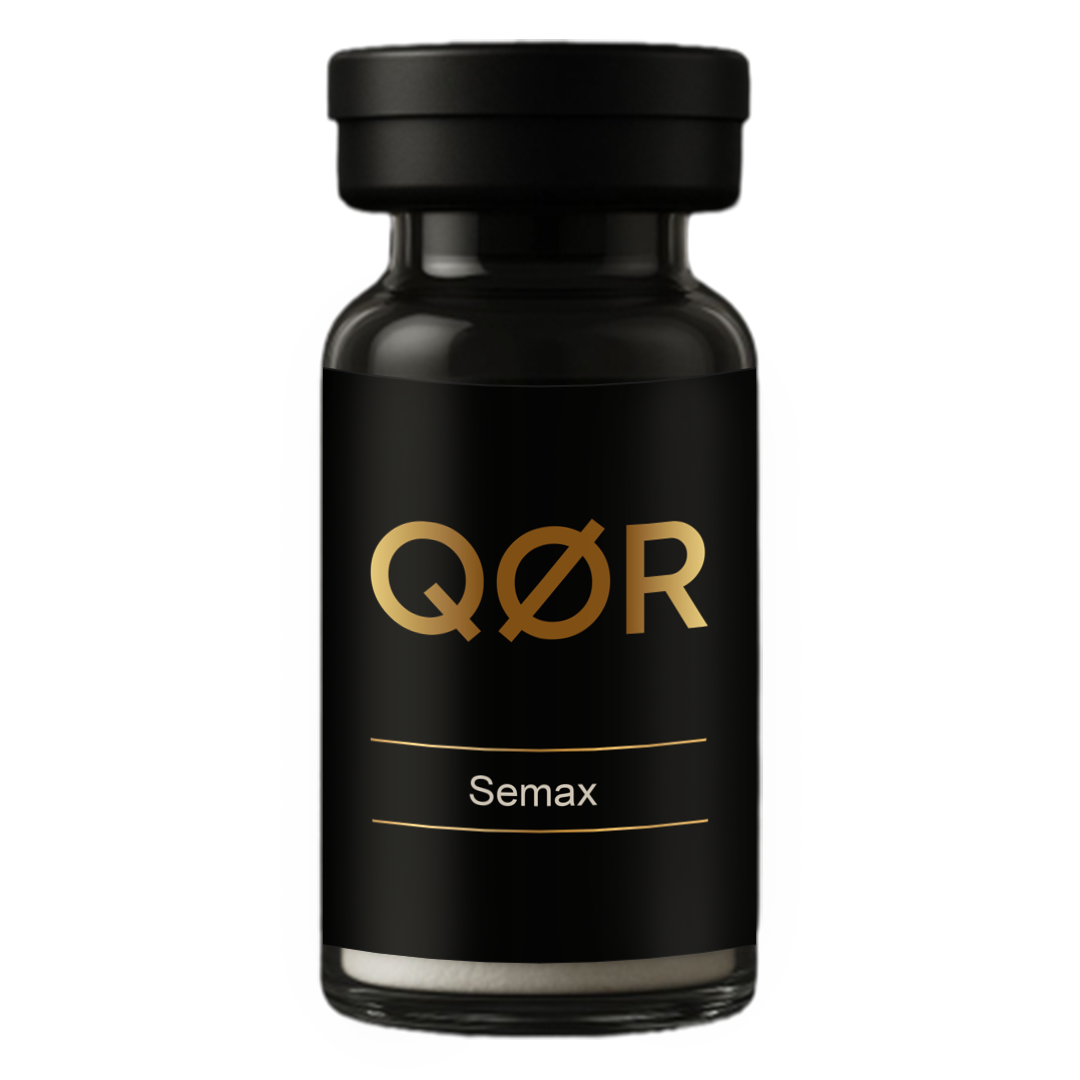
Semax 10mg: An ACTH-derived heptapeptide used as a tool compound to study neurotrophic signaling, BDNF expression, and neuronal plasticity in CNS models.
Semax 10mg is a synthetic heptapeptide with the sequence Met Glu His Phe Pro Gly Pro derived from the ACTH 4 10 fragment. It is supplied as a research grade peptide for use in central nervous system and neurobiology focused laboratory studies. This material is intended for qualified investigators who require a characterised ACTH derived fragment for mechanistic and signaling research.
Molecular and pharmacologic information
Semax belongs to a class of short peptides modelled on adrenocorticotropic hormone fragments that have been modified to enhance experimental stability and receptor interactions.
In the published literature Semax has been studied for its ability to influence neurotrophic and neuroplastic signaling pathways in preclinical models.
These investigations frequently focus on markers associated with brain derived neurotrophic factor BDNF its high affinity receptor TrkB and transcriptional programs linked to neurogenic factors such as NGF and GAP 43. Experimental work has also examined Semax in systems that track redox balance neuronal plasticity endpoints and dopaminergic regulation within central nervous system preparations.
These data are model dependent and serve primarily to position Semax as a tool compound for exploring peptide mediated modulation of neurobiological pathways.
Intended use
This product is intended exclusively for in vitro experiments ex vivo preparations and other controlled laboratory research applications. It may be used as a reference standard or tool compound in studies of peptide signaling neurotrophic factor regulation synaptic plasticity and related areas of CNS research.
It is not intended for human or veterinary use.
It is not intended for diagnosis treatment cure prevention or mitigation of any disease or medical condition.
It is not a drug food dietary supplement cosmetic or medical device.
Key features
Synthetic ACTH 4 10 derived heptapeptide for neurobiology research
Suitable for use in studies involving BDNF TrkB and associated neurotrophic signaling pathways
Manufactured under controlled conditions with analytical verification of identity and purity.
Overview
Semax is a synthetic heptapeptide based on the ACTH 4 to 10 fragment with the sequence Met Glu His Phe Pro Gly Pro. It has been used in preclinical and clinical research programs that focus on central nervous system signaling neuroprotection and cognitive related endpoints. The information in this section is a summary of how Semax has been applied as a tool compound in the scientific literature. All observations are study specific and do not establish safety or efficacy for any therapeutic use.
1. Neurotrophic and neuroplastic signaling
A primary focus of Semax research is its impact on neurotrophic factor pathways. Preclinical work has examined how Semax influences expression and signaling of brain derived neurotrophic factor and its high affinity receptor TrkB. Studies have also looked at transcriptional programs associated with nerve growth factor and growth associated protein 43 which are linked to axonal growth synaptic remodeling and neuronal plasticity. These investigations typically measure changes in gene expression protein levels and downstream signaling markers in brain regions associated with learning memory and stress response.
In this context Semax is used as a tool to probe how short ACTH derived peptides can modulate neurotrophic networks and to map the relationship between peptide exposure and structural or functional plasticity in central nervous system models.
2. Neuroprotection and neuronal plasticity
Another line of research uses Semax in models of neuronal injury and neurodegeneration. These include ischemic brain injury models excitotoxic damage and various toxin or stress induced paradigms. Endpoints in these studies can involve neuronal survival histological assessment of damaged regions behavioral readouts in animals and electrophysiological measures of synaptic function. Semax has been evaluated for its ability to alter the expression of genes and proteins involved in cytoskeletal dynamics synapse structure and long term potentiation related pathways. This work positions Semax as a candidate probe for examining how peptide signaling may support adaptive responses and recovery processes in injured neural tissue under experimental conditions.
3. Redox balance and oxidative stress markers
Semax has also been studied in relation to redox homeostasis within central nervous system models. Researchers have monitored markers of oxidative stress such as lipid peroxidation products antioxidant enzyme activities and reactive oxygen species in brain tissue or neuronal cultures exposed to various insults. In these setups Semax is used to explore whether modulation of redox related pathways accompanies changes in neurotrophic signaling and neuronal viability. Results from these studies are used to build mechanistic frameworks that link peptide exposure to antioxidant defense systems and cellular stress responses.
4. Dopaminergic systems and neuromodulation
Several preclinical investigations have examined the effects of Semax on dopaminergic neurotransmission. These studies often measure dopamine levels receptor expression and related signaling components in brain regions involved in motivation attention and motor control. Behavioral paradigms in rodents have been combined with biochemical assays to assess how Semax may influence dopaminergic tone and downstream circuits. This work is exploratory and aims to clarify how ACTH fragment derived peptides intersect with classic neuromodulator systems.
Typical research applications
Across the literature Semax is frequently used in central nervous system injury and neuroprotection models studies of neurotrophic and neuroplastic signaling
redox and oxidative stress research in neural tissue dopaminergic and broader neuromodulator pathway investigations. In these contexts Semax functions as a research tool for dissecting peptide driven mechanisms in neural circuits rather than as an established therapeutic agent.
Important research disclaimer
All findings summarised here are derived from controlled preclinical models and limited clinical research conducted under specific protocols. They are provided only to inform qualified researchers about how Semax has been used in scientific studies. These observations do not demonstrate or imply that Semax is safe or effective for any human or veterinary indication. They are not dosing instructions medical advice or guidance for cognitive enhancement or treatment of neurological conditions.
The Semax product offered is intended strictly for laboratory research applications.
It is not for human or veterinary use and must not be used for diagnosis treatment cure prevention or mitigation of any disease or condition.
Storage Instructions
Store peptides only in professional, controlled environments that operate under their own safety and quality systems. All storage, handling, and disposal must follow your organization’s written policies, risk assessments, and standard operating procedures. It is the responsibility of the facility and its staff to ensure that these policies are in place, understood, and actively followed. Keep vials in a cool, dry location away from direct light, heat, and moisture. Vials should remain upright, sealed, and protected from physical impact so contents and labels stay intact and legible. If your procedures include freezing, use appropriate working volumes and avoid repeated freeze and thaw cycles of the same vial. Do not store peptides near food, drink, or general consumables. Keep them only in designated storage areas with controlled access that reflect your internal governance and regulatory obligations. Handling and preparation must be carried out solely by personnel who are trained and authorized under your institutional guidelines.
Intended use
This product is intended exclusively for in vitro experiments ex vivo preparations and other controlled laboratory research applications including animal studies conducted under appropriate oversight. Typical uses include cell culture assays biochemical experiments on copper binding and transport and investigations of extracellular matrix remodeling and tissue biology. It is not intended for human or veterinary use. It is not intended for diagnosis treatment cure prevention or mitigation of any disease or cosmetic condition. It is not a drug food dietary supplement cosmetic ingredient or medical device.
Glutathione 1500mg: A fundamental tripeptide reagent for investigating cellular redox buffering, antioxidant enzyme kinetics, and thiol-mediated detoxification pathways.
Tesamorelin: A 44-amino acid GHRH analogue used to investigate growth hormone axis regulation, visceral adiposity, and neuroendocrine-metabolic interactions.
$175.00–$275.00Price range: $175.00 through $275.00
NAD: A central metabolic coenzyme used in laboratory assays to study mitochondrial bioenergetics, sirtuin activity, and NAD-dependent signaling pathways.
Recently viewed
What our customers say about us
Academic Research Center
Documentation was complete, packaging was appropriate for our facility, and delivery aligned with our internal timelines.
Private Research Organization
Consistent batch records and clear technical communication support our internal quality requirements.
Academic research center
From ordering through delivery, communication and documentation have met our institutional expectations for research materials procurement.
Private research laboratory
QØR has supplied us with consistent reference materials and clear batch documentation across multiple orders, supporting our in-house assay validation work