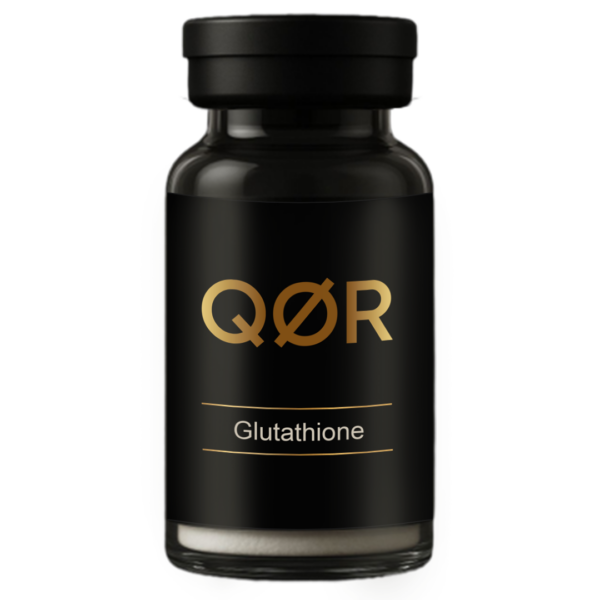
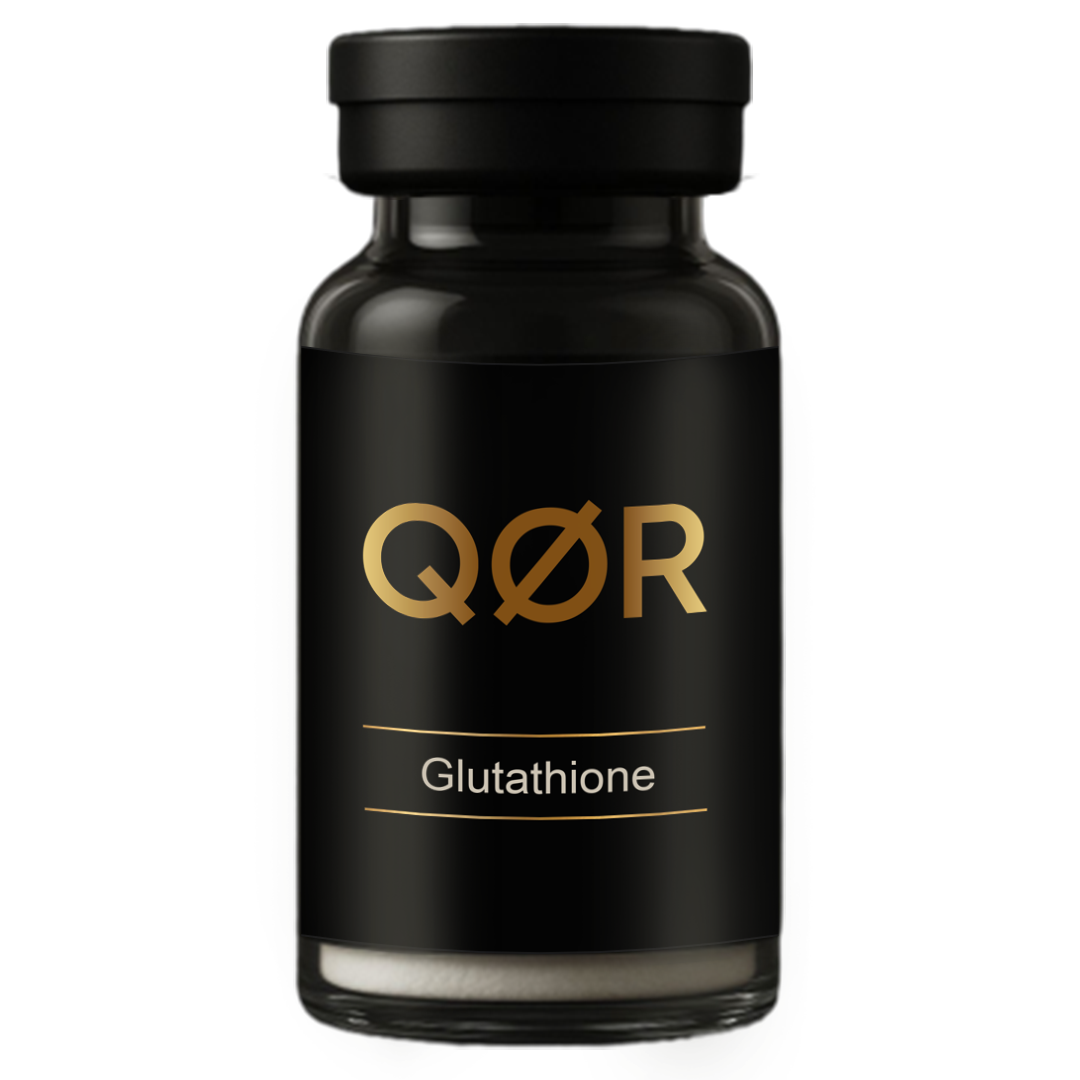
Glutathione 1500mg: A fundamental tripeptide reagent for investigating cellular redox buffering, antioxidant enzyme kinetics, and thiol-mediated detoxification pathways.
L Glutathione is a tripeptide composed of gamma L glutamyl L cysteinyl glycine. It functions as a central intracellular thiol and redox buffer and is one of the primary low molecular weight antioxidants in mammalian cells. This material is supplied for use in biochemical and cellular research requiring a defined source of reduced glutathione.
Molecular and biochemical information
L Glutathione exists predominantly in the reduced form GSH under physiological conditions and can be reversibly oxidised to glutathione disulfide GSSG.
Through this redox couple it participates in maintaining cellular thiol balance modulating reactive oxygen species and supporting detoxification processes.
In experimental systems L Glutathione is widely used to study oxidative stress pathways redox sensitive signaling and glutathione dependent enzyme systems such as glutathione peroxidases glutathione S transferases and glutathione reductase. It also serves as a key reagent for calibrating assays that quantify glutathione pools and redox status in cells and tissues.
Intended use
This product is intended exclusively for in vitro experiments ex vivo preparations and other controlled laboratory research applications. Typical uses include biochemical assays cell culture studies redox biochemistry experiments and method development in analytical laboratories. It is not intended for human or veterinary use. It is not intended for diagnosis treatment cure prevention or mitigation of any disease or medical condition. It is not a drug food dietary supplement cosmetic or medical device.
Key features
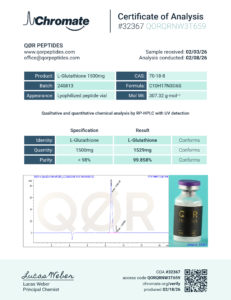
Defined tripeptide gamma L glutamyl L cysteinylglycine suitable for redox and antioxidant research Applicable in assays of oxidative stress glutathione dependent enzymes and cellular detoxification pathways Manufactured under controlled conditions with analytical verification of identity and purity.
Overview
L Glutathione is a tripeptide composed of gamma L glutamyl L cysteinylglycine. It is a central intracellular thiol and one of the most intensively studied small molecule antioxidants in biology. The information in this section outlines how L Glutathione is used as a tool compound in oxidative stress and redox research.
All observations are model specific and do not represent safety or efficacy claims for any clinical use.
1. Redox buffering and glutathione couple studies
A primary focus of L Glutathione research is its role in the GSH GSSG redox couple. Investigators routinely measure reduced glutathione GSH and oxidised glutathione GSSG to characterise cellular redox state under different experimental conditions. L Glutathione standards are used to calibrate assays based on HPLC spectrophotometry mass spectrometry and fluorometric detection. These methods support quantification of glutathione pools in cells tissues and biofluids in response to oxidative insults nutrient changes and pharmacologic interventions. By manipulating intracellular GSH levels with exogenous L Glutathione or depleting agents researchers probe how redox buffering capacity shapes signaling pathways gene expression and cell fate decisions.
2. Oxidative stress and antioxidant defense models
L Glutathione is central to many experimental models of oxidative stress. In cell culture and ex vivo preparations it is used to evaluate how reactive oxygen species influence membrane lipids proteins and nucleic acids. Researchers often track markers such as lipid peroxidation products protein carbonyls and DNA oxidation alongside glutathione levels. In these studies L Glutathione functions both as a substrate for antioxidant enzymes and as a readout of cellular antioxidant capacity.
Perturbing glutathione synthesis or recycling allows investigators to dissect the contributions of glutathione dependent pathways to protection against chemical toxins radiation and inflammatory mediators.
3. Glutathione dependent enzymatic pathways
A large body of work focuses on enzymes that use glutathione as a cofactor or substrate. These include glutathione peroxidases which reduce peroxides glutathione S transferases which conjugate electrophiles and glutathione reductase which regenerates GSH from GSSG. Purified L Glutathione is essential for in vitro enzyme kinetics assays where reaction rates Km values and inhibitor profiles are determined. In cell based systems modulation of L Glutathione levels is used to study how these enzyme families contribute to detoxification drug metabolism and signaling regulation. This work underpins many mechanistic models of xenobiotic clearance and phase II metabolism.
4. Cellular protection and signaling research
Beyond direct antioxidant chemistry L Glutathione participates in redox sensitive signaling. Protein S glutathionylation reversible conjugation of glutathione to cysteine residues is a key post translational modification studied in this context. Researchers use L Glutathione and its oxidised form to drive or reverse glutathionylation in vitro and then analyse changes in enzyme activity receptor function and transcription factor behavior. This approach helps map redox switches that control metabolic enzymes ion channels and stress response pathways. In parallel cell viability and apoptosis assays frequently incorporate manipulation of glutathione levels to understand how redox balance interacts with cell death programs.
Typical research applications
Across laboratories L Glutathione is routinely used in oxidative stress and redox biochemistry studies enzyme kinetics for glutathione dependent enzymes
cell culture models of detoxification and xenobiotic response method development for glutathione quantification in biological samples. In each of these areas L Glutathione serves as a fundamental reference compound rather than a therapeutic agent.
Important research disclaimer
All uses described here take place in controlled in vitro systems ex vivo preparations and animal models. They are presented solely to illustrate how L Glutathione functions as a research tool in redox and antioxidant biology. These observations do not imply that L Glutathione is safe or effective for any human or veterinary indication.
They are not dosing instructions medical advice or guidance for clinical use. The L Glutathione product offered is intended strictly for laboratory research applications.
It is not for human or veterinary use and must not be used for diagnosis treatment cure prevention or mitigation of any disease or condition.
Store peptides only in professional, controlled environments that operate under their own safety and quality systems. All storage, handling, and disposal must follow your organization’s written policies, risk assessments, and standard operating procedures. It is the responsibility of the facility and its staff to ensure that these policies are in place, understood, and actively followed. Keep vials in a cool, dry location away from direct light, heat, and moisture. Vials should remain upright, sealed, and protected from physical impact so contents and labels stay intact and legible. If your procedures include freezing, use appropriate working volumes and avoid repeated freeze and thaw cycles of the same vial. Do not store peptides near food, drink, or general consumables. Keep them only in designated storage areas with controlled access that reflect your internal governance and regulatory obligations. Handling and preparation must be carried out solely by personnel who are trained and authorized under your institutional guidelines.
Intended use
This product is intended exclusively for in vitro experiments ex vivo preparations and other controlled laboratory research applications including animal studies conducted under appropriate oversight. Typical uses include cell culture assays biochemical experiments on copper binding and transport and investigations of extracellular matrix remodeling and tissue biology. It is not intended for human or veterinary use. It is not intended for diagnosis treatment cure prevention or mitigation of any disease or cosmetic condition. It is not a drug food dietary supplement cosmetic ingredient or medical device.
NAD: A central metabolic coenzyme used in laboratory assays to study mitochondrial bioenergetics, sirtuin activity, and NAD-dependent signaling pathways.
PT-141 10mg: A synthetic melanocortin receptor agonist (MC3R/MC4R) used to study GPCR pharmacology and hypothalamic signaling networks in laboratory models.
Recently viewed
What our customers say about us
Academic Research Center
Documentation was complete, packaging was appropriate for our facility, and delivery aligned with our internal timelines.
Private Research Organization
Consistent batch records and clear technical communication support our internal quality requirements.
Academic research center
From ordering through delivery, communication and documentation have met our institutional expectations for research materials procurement.
Private research laboratory
QØR has supplied us with consistent reference materials and clear batch documentation across multiple orders, supporting our in-house assay validation work